
The 2026 job market is poised for significant transformation, driven by technological advancements and shifting societal needs, creating abundant opportunities across diverse high-growth sectors.
Understanding the 2026 job market is crucial for anyone planning their career or looking to adapt to rapid economic changes. As technology continues to reshape industries and global challenges demand innovative solutions, certain sectors are experiencing unprecedented growth, offering promising career paths and investment opportunities. This comprehensive analysis delves into seven emerging high-growth sectors that are set to define the employment landscape in the coming years.
The Rise of Artificial Intelligence and Machine Learning
Artificial Intelligence (AI) and Machine Learning (ML) are not just buzzwords; they are foundational technologies revolutionizing virtually every industry. From automating complex tasks to enabling predictive analytics, AI/ML specialists are in high demand across the board. This sector’s growth is fueled by the continuous development of more sophisticated algorithms and the increasing availability of data.
The integration of AI into daily operations is driving efficiency and creating new product offerings. Companies are actively seeking talent capable of developing, implementing, and managing AI solutions, leading to a surge in specialized roles and significant salary growth for skilled professionals.
Key Roles and Skill Sets in AI/ML
The AI/ML sector offers diverse roles, each requiring a specific blend of technical and analytical skills. Understanding these roles is key to navigating this dynamic field.
- AI Engineer: Designs and develops AI models and applications, often working with deep learning frameworks.
- Machine Learning Scientist: Focuses on research and development of new ML algorithms and improving existing ones.
- Data Scientist: Analyzes complex datasets to extract insights and inform business decisions, often employing ML techniques.
- Robotics Engineer: Integrates AI into robotic systems for various applications, from manufacturing to healthcare.
The demand for these professionals is projected to continue its upward trajectory as businesses increasingly rely on intelligent systems to maintain a competitive edge. Continuous learning and adaptation are essential for success in this rapidly evolving field.
Sustainable Energy and Green Technologies
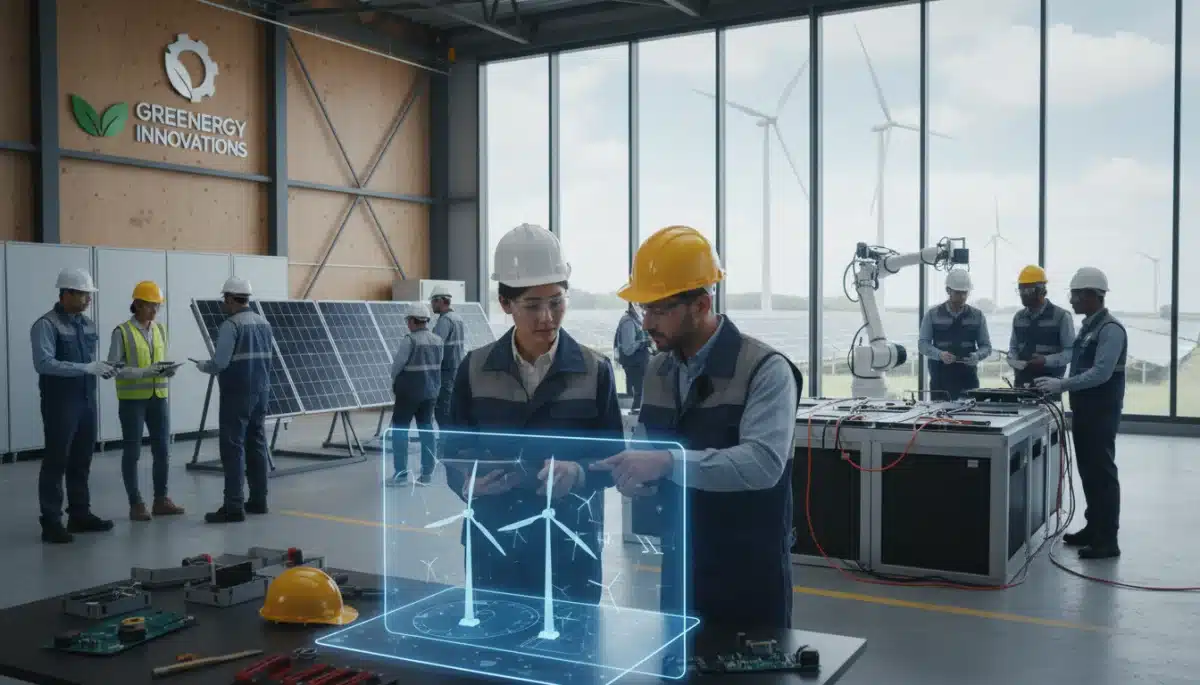
The global push towards sustainability and combating climate change has propelled the sustainable energy and green technologies sector into a period of rapid expansion. This industry encompasses everything from renewable energy generation to eco-friendly manufacturing processes and waste management solutions. Governments and corporations worldwide are investing heavily in green initiatives, creating a robust market for innovative solutions and skilled labor.
This sector is characterized by its interdisciplinary nature, blending engineering, environmental science, and policy. As the transition to a carbon-neutral economy accelerates, the need for professionals who can design, implement, and manage sustainable systems will only grow.
Opportunities in Renewable Energy
Renewable energy sources such as solar, wind, and geothermal are at the forefront of this sector’s growth. The expansion of these technologies creates a wide array of job opportunities.
- Solar Panel Technicians: Install and maintain solar energy systems for residential and commercial properties.
- Wind Turbine Engineers: Design, develop, and oversee the construction and maintenance of wind power infrastructure.
- Environmental Consultants: Advise organizations on sustainable practices and compliance with environmental regulations.
- Bioenergy Specialists: Work with biomass and other organic materials to produce energy.
The sustainable energy sector is not only about generating clean power but also about developing smart grids, energy storage solutions, and sustainable urban planning. This holistic approach ensures long-term growth and a continuous demand for diverse skill sets.
Advanced Healthcare and Biotechnology
Healthcare and biotechnology are experiencing unprecedented advancements, driven by breakthroughs in genomics, personalized medicine, and digital health. The aging global population, coupled with increasing demand for innovative treatments and preventative care, ensures this sector’s sustained growth. From drug discovery to medical device development and telehealth services, the opportunities are vast and impactful.
This sector requires a highly skilled workforce, ranging from research scientists to clinical trial specialists and bioinformaticians. The convergence of technology and biology is creating entirely new fields and reshaping traditional healthcare delivery models.
Innovations Driving Healthcare Growth
Several key innovations are propelling the advanced healthcare and biotechnology sector forward, creating new roles and demands for specialized expertise.
- Personalized Medicine: Tailoring medical treatment to the individual characteristics of each patient, driven by genetic and molecular data.
- Gene Editing Technologies: Revolutionary tools like CRISPR are opening new avenues for treating genetic diseases.
- Digital Health Solutions: Telemedicine, wearable health tech, and AI-powered diagnostics are transforming patient care and accessibility.
- Biopharmaceutical Research: Development of new drugs and therapies for a wide range of conditions, from cancer to autoimmune disorders.
The emphasis on preventive care and precision medicine will continue to drive innovation and job creation in this vital sector. Professionals with expertise in data analysis, molecular biology, and clinical research will be particularly sought after.
Cybersecurity and Data Privacy
In an increasingly interconnected world, cybersecurity and data privacy have become paramount. As digital transformation accelerates across all industries, so too does the threat landscape. Businesses and governments are investing heavily in protecting their digital assets and sensitive information, making this a perpetually high-growth sector. The demand for skilled cybersecurity professionals far outstrips supply, creating significant career opportunities.
This field constantly evolves, requiring professionals to stay abreast of the latest threats, vulnerabilities, and defense mechanisms. From ethical hacking to incident response and compliance, the roles are critical for maintaining trust and operational integrity in the digital age.
Critical Areas in Cybersecurity
The cybersecurity landscape is broad and complex, with several critical areas demanding specialized attention and expertise.
- Network Security: Protecting computer networks from intrusion and data breaches.
- Cloud Security: Securing data and applications hosted in cloud environments.
- Application Security: Ensuring software applications are free from vulnerabilities.
- Data Privacy Compliance: Implementing and managing protocols to adhere to regulations like GDPR and CCPA.
As cyber threats become more sophisticated, the need for proactive and adaptive cybersecurity strategies will only intensify. This makes the sector a stable and growing source of employment for those with the right skills and dedication.
Augmented and Virtual Reality (AR/VR)
Augmented Reality (AR) and Virtual Reality (VR) technologies are moving beyond gaming and entertainment, finding significant applications in enterprise, education, healthcare, and manufacturing. These immersive technologies are transforming how we interact with digital content, train employees, and even conduct remote operations. The market for AR/VR hardware and software is expanding rapidly, creating a vibrant ecosystem of innovation and job creation.
The development of more accessible and powerful AR/VR devices is democratizing these technologies, opening up new possibilities for their use in diverse industries. This sector requires a blend of creative, technical, and user experience design skills.
Transformative Applications of AR/VR
AR/VR technologies are poised to revolutionize various industries by offering immersive and interactive experiences.
- Training and Simulation: Providing realistic training environments for fields like medicine, aviation, and engineering.
- Remote Collaboration: Enabling geographically dispersed teams to work together in virtual spaces.
- Design and Prototyping: Allowing engineers and designers to visualize and iterate on products in 3D.
- Retail and E-commerce: Enhancing customer experiences with virtual try-ons and interactive product displays.
As these applications become more widespread, the demand for AR/VR developers, content creators, and hardware specialists will continue to grow, making this an exciting and forward-looking sector.
Robotics and Automation
Robotics and automation are transforming manufacturing, logistics, healthcare, and even service industries. The drive for increased efficiency, precision, and safety is accelerating the adoption of robotic systems. From industrial robots on factory floors to autonomous delivery vehicles and surgical robots, this sector is experiencing exponential growth and innovation. This trend is not about replacing human jobs entirely, but rather augmenting human capabilities and creating new, more specialized roles.
The convergence of AI, sensors, and advanced materials is enabling the development of more intelligent and versatile robots. This requires a workforce skilled in robotics engineering, programming, and maintenance.
Impact of Robotics on Industries
Robotics and automation are reshaping operational paradigms across a multitude of industries, leading to enhanced productivity and new job classifications.
- Manufacturing: Automated assembly lines and quality control systems improve production speed and accuracy.
- Logistics and Warehousing: Autonomous robots handle sorting, packing, and transportation of goods, optimizing supply chains.
- Healthcare: Surgical robots assist in complex procedures, and autonomous robots deliver medical supplies within hospitals.
- Agriculture: Robotic systems perform tasks like planting, harvesting, and monitoring crop health, increasing efficiency.
As robots become more integrated into daily operations, the need for human oversight, programming, and maintenance will drive demand for a highly skilled workforce, ensuring continued growth in this sector.
Fintech and Digital Finance
The financial sector is undergoing a profound transformation driven by technology, giving rise to Fintech (Financial Technology) and digital finance. This sector includes everything from mobile banking and online payment systems to blockchain-based financial services and algorithmic trading. Fintech aims to make financial services more accessible, efficient, and secure, challenging traditional banking models and creating new market opportunities.
The rapid adoption of digital payment methods and the increasing interest in cryptocurrencies and decentralized finance (DeFi) are significant drivers of growth. This requires professionals with expertise in software development, data analytics, blockchain technology, and financial regulations.
Innovations in Digital Finance
Digital finance is continually evolving, with innovations that are reshaping how individuals and businesses manage their money.
- Blockchain and Cryptocurrencies: Decentralized ledger technology enabling secure and transparent transactions.
- Mobile Banking and Payments: Convenient access to financial services and instant transactions via smartphones.
- Robo-Advisors: AI-powered platforms providing automated financial advice and investment management.
- Peer-to-Peer Lending: Online platforms connecting borrowers directly with lenders, bypassing traditional financial institutions.
The ongoing digitalization of financial services ensures that Fintech and digital finance will remain a high-growth sector, offering exciting career paths for those who combine technological prowess with financial acumen.
| Key Sector | Growth Driver & Key Roles |
|---|---|
| AI and Machine Learning | Automation, predictive analytics; AI Engineers, Data Scientists. |
| Sustainable Energy | Climate action, renewable tech; Solar Technicians, Environmental Consultants. |
| Advanced Healthcare | Genomics, personalized medicine; Bioinformaticians, Clinical Researchers. |
| Cybersecurity | Digital threats, data protection; Security Analysts, Incident Responders. |
Frequently Asked Questions about the 2026 Job Market
Sectors like cybersecurity, advanced healthcare, and sustainable energy are expected to offer high job security due to constant demand, critical societal needs, and continuous innovation. These fields are less susceptible to automation that displaces human jobs, often requiring complex problem-solving and human oversight.
To prepare, focus on upskilling in digital literacy, data analysis, and critical thinking. Consider certifications in AI, cybersecurity, or renewable energy. Networking within your desired high-growth sector and pursuing lifelong learning will also be crucial for career adaptability and success.
While AI will automate routine tasks, it is more likely to augment human capabilities rather than fully replace jobs by 2026. It will shift the demand towards roles requiring creativity, emotional intelligence, and complex problem-solving that AI cannot replicate, leading to new job categories and enhanced productivity.
Key in-demand skills for 2026 include advanced digital proficiency, data analysis, critical thinking, complex problem-solving, adaptability, emotional intelligence, and interdisciplinary collaboration. Specific technical skills in AI/ML, cybersecurity, and green technologies will also be highly valued across various industries.
Yes, remote and hybrid work models are expected to remain prevalent in 2026, particularly in technology-driven sectors. Companies have recognized the benefits of flexibility, and advancements in collaboration tools continue to support distributed teams. Adaptability to virtual environments will remain a critical professional attribute.
Conclusion
The 2026 job market is characterized by dynamic growth and transformative opportunities across several key sectors. From the relentless march of Artificial Intelligence and Machine Learning to the urgent demand for Sustainable Energy solutions and the critical need for Cybersecurity experts, the landscape is rapidly evolving. Advanced Healthcare, Augmented/Virtual Reality, Robotics and Automation, and Fintech are also charting impressive growth trajectories, promising innovative career paths. For individuals and organizations alike, understanding these shifts and proactively adapting to the emerging skill requirements will be paramount for success and sustained relevance in the years to come.