
Upcoming Cryptocurrency Regulations 2026 are anticipated to significantly affect digital assets, potentially altering valuations by up to 10% through new frameworks designed to enhance investor protection, market stability, and combat illicit financial activities.
The digital asset landscape is constantly evolving, and as we approach 2026, the discussion around Cryptocurrency Regulations 2026 has reached a fever pitch. These impending policies are not merely theoretical constructs; they are set to redefine how individuals interact with their digital holdings, potentially influencing the value of your assets by as much as 10% or more. Understanding these changes is crucial for anyone involved in the crypto space.
The Evolving Regulatory Landscape: A Global Perspective
The global approach to cryptocurrency regulation has been fragmented, with various jurisdictions adopting different stances, from outright bans to embracing digital assets. However, 2026 is projected to bring a more unified and comprehensive regulatory push, particularly in leading financial markets like the United States. This shift is driven by a desire to mitigate risks associated with market volatility, consumer protection, and illicit financial activities.
Policymakers are increasingly recognizing the mainstream appeal of cryptocurrencies and the need for a robust framework that supports innovation while safeguarding the financial system. This involves a delicate balancing act, as overly restrictive regulations could stifle growth, while lax oversight could invite instability. The challenge lies in creating policies that are adaptable to the rapidly changing technological landscape of digital assets.
Key Drivers of Regulatory Change
- Market Stability Concerns: The inherent volatility of cryptocurrencies has prompted regulators to seek mechanisms for price stability and preventing systemic risks.
- Consumer Protection: Protecting retail investors from scams, fraud, and market manipulation is a primary objective for new regulations.
- Anti-Money Laundering (AML) and Counter-Terrorist Financing (CTF): Governments aim to close loopholes that allow cryptocurrencies to be used for illegal activities.
- Taxation and Revenue Generation: As digital assets gain value, governments are keen to ensure fair and effective taxation.
The confluence of these factors is creating an environment where significant regulatory shifts are not just possible, but highly probable. These changes will not only affect the major players in the crypto market but also individual investors and their digital asset portfolios.
Impact on Digital Asset Valuations: The 10% Shift Explained
The prediction of a 10% impact on digital asset valuations by Cryptocurrency Regulations 2026 is not an arbitrary figure but an estimation based on several potential regulatory outcomes. This figure represents a possible average shift, with some assets experiencing greater volatility and others less. The nature of the regulations will dictate the direction and magnitude of this impact.
For instance, regulations that foster institutional adoption and clarity could lead to increased investment and upward price pressure. Conversely, stringent regulations that impose heavy compliance burdens or limit access could lead to a downward correction. It’s a complex interplay of supply, demand, and regulatory sentiment.
Moreover, the impact won’t be uniform across all digital assets. Established cryptocurrencies with strong fundamentals and existing compliance mechanisms might weather the changes better. Newer, less liquid, or highly speculative assets could face more significant fluctuations. Diversification and informed decision-making will be more critical than ever.
Factors Influencing Valuation Changes
- Regulatory Clarity: Clear rules can reduce uncertainty, attracting more institutional and retail investors.
- Compliance Costs: New reporting and operational requirements can increase costs for crypto businesses, potentially passed to users.
- Institutional Adoption: Regulations that pave the way for ETFs and other traditional investment vehicles can boost demand.
- Market Sentiment: Positive or negative regulatory news can heavily sway investor confidence and market prices.
Understanding these factors is key to anticipating how specific policy changes might influence your digital assets. The 10% figure serves as a general indicator of the potential volatility and adjustment period the crypto market might experience as these regulations take hold.
Key Regulatory Areas to Watch in 2026
As we look towards 2026, several key regulatory areas are expected to see significant developments. These include stricter Know Your Customer (KYC) and Anti-Money Laundering (AML) requirements, enhanced consumer protection measures, and clearer classifications for digital assets. The goal is to bring the crypto market more in line with traditional financial systems, albeit with adaptations for its unique characteristics.
One major focus will be on stablecoins, given their growing importance in the broader crypto ecosystem. Regulators are likely to demand greater transparency regarding reserves and more robust risk management frameworks for these assets. Decentralized finance (DeFi) is another area under scrutiny, with authorities exploring ways to manage its inherent decentralization while addressing potential systemic risks.
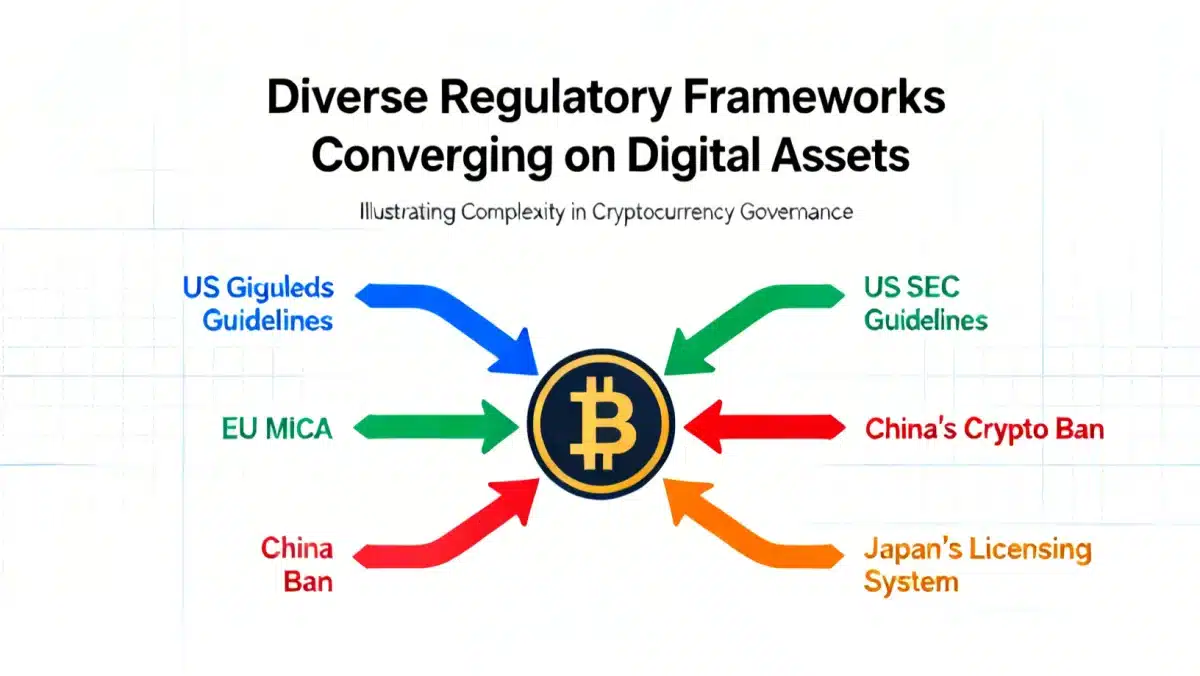
The Securities and Exchange Commission (SEC) and the Commodity Futures Trading Commission (CFTC) in the United States are expected to play pivotal roles in shaping these regulations, each vying for jurisdiction over different aspects of the crypto market. Their collaborative or sometimes conflicting approaches will significantly influence the regulatory landscape.
Anticipated Regulatory Focus
- Stablecoin Regulation: Ensuring stablecoins are backed by adequate reserves and are subject to regular audits.
- DeFi Oversight: Developing frameworks for decentralized protocols without stifling innovation.
- Central Bank Digital Currencies (CBDCs): The emergence of CBDCs could reshape the entire financial infrastructure, impacting private cryptocurrencies.
- International Cooperation: Greater collaboration among global regulators to prevent regulatory arbitrage and ensure consistent standards.
These areas represent the battlegrounds where the future of cryptocurrency regulation will be forged. Investors and participants in the crypto space must stay informed on these developments to navigate the evolving market effectively.
How New Policies Will Affect Individual Investors
For individual investors, the impending Cryptocurrency Regulations 2026 will bring both challenges and opportunities. On one hand, increased regulatory clarity and consumer protection could lead to a safer and more transparent investment environment, potentially attracting new capital into the market. This could, in turn, lead to greater stability and long-term growth for certain assets.
On the other hand, compliance requirements might become more burdensome. Investors could face stricter identity verification processes, more detailed tax reporting obligations, and potentially limitations on certain types of decentralized trading or lending activities. The ease of access that initially drew many to crypto might be tempered by a more regulated environment.
It’s also possible that some smaller, non-compliant exchanges or platforms may struggle to adapt, leading to a consolidation of the market around larger, more regulated entities. This could impact liquidity for certain assets or limit options for investors. Preparing for these changes by understanding your obligations and choosing compliant platforms will be essential.
Implications for Individual Portfolios
- Enhanced Security: Regulations could lead to more secure platforms and reduced risk of hacks or fraud.
- Tax Compliance: Stricter reporting requirements will necessitate better record-keeping for crypto transactions.
- Access to New Products: Regulatory clarity might open doors for new regulated investment products like spot Bitcoin ETFs.
- Platform Selection: Investors may need to prioritize exchanges and services that demonstrate strong regulatory compliance.
Ultimately, while these regulations may introduce new complexities, they are also designed to foster a more mature and resilient digital asset ecosystem. Individual investors who adapt to these changes will be better positioned to thrive.
The Role of Technology in Regulatory Compliance
As Cryptocurrency Regulations 2026 take shape, technology will play an indispensable role in facilitating compliance. Blockchain analytics tools, artificial intelligence, and machine learning are already being deployed to monitor transactions, identify suspicious activities, and ensure adherence to AML/CTF regulations. These technologies provide scalability and efficiency that manual processes cannot match.
Furthermore, regulatory technology (RegTech) solutions are emerging to help crypto businesses automate compliance tasks, from KYC onboarding to ongoing transaction monitoring and reporting. This not only reduces the operational burden but also enhances the accuracy and consistency of compliance efforts. The evolution of these tools will be critical for both regulators and regulated entities.
Innovations in privacy-enhancing technologies, such as zero-knowledge proofs, also present a fascinating challenge and opportunity. While they can protect user privacy, regulators will need to ensure that these technologies do not become a shield for illicit activities. Balancing privacy with transparency for regulatory purposes will be a key area of development.
Technological Solutions for Compliance
- Blockchain Analytics: Tracing funds and identifying illicit activities on public ledgers.
- RegTech Platforms: Automating compliance processes for exchanges and financial institutions.
- AI and Machine Learning: Enhancing fraud detection and risk assessment in real-time.
- Digital Identity Solutions: Streamlining KYC procedures while maintaining data security.
The synergy between regulatory requirements and technological innovation will define the efficiency and effectiveness of the new crypto regulatory framework. Embracing these tools will be crucial for all stakeholders.
Navigating the Future: Strategies for Digital Asset Holders
Given the anticipated shifts from Cryptocurrency Regulations 2026, digital asset holders need to adopt proactive strategies to navigate the evolving landscape. The first step is to stay informed about regulatory developments, particularly those emanating from key financial jurisdictions like the United States. Subscribing to reputable crypto news sources and official government announcements is vital.
Secondly, reassess your portfolio. Consider diversifying your holdings across different asset classes and cryptocurrencies to mitigate risks associated with specific regulatory impacts. Evaluate the compliance posture of the exchanges and platforms you use, favoring those with a strong track record and clear commitment to regulatory adherence.
Finally, prepare for potential changes in tax reporting and record-keeping. The days of casual crypto investing without detailed documentation are likely drawing to a close. Consulting with financial advisors specializing in digital assets can provide tailored guidance and help you optimize your strategy in this new regulatory environment.
Essential Strategies for Investors
- Stay Informed: Regularly monitor regulatory news and official policy updates.
- Review Portfolio: Diversify assets and assess risk exposure to potential regulatory changes.
- Choose Compliant Platforms: Prioritize exchanges and services adhering to current and future regulations.
- Plan for Taxes: Maintain meticulous records for all transactions and seek professional tax advice.
By taking these proactive steps, digital asset holders can not only mitigate potential negative impacts but also position themselves to capitalize on the opportunities that a more regulated and mature crypto market may present.
| Key Regulatory Area | Potential Impact on Digital Assets |
|---|---|
| AML/KYC Enforcement | Increased security and reduced illicit activity; potential for higher compliance costs for platforms. |
| Stablecoin Oversight | Enhanced stability and trust; stricter reserve requirements may impact issuance. |
| Taxation Frameworks | Clearer tax obligations for investors; potential for new revenue streams for governments. |
| DeFi Regulation | Balancing innovation with risk management; potential for decentralized protocols to adapt. |
Frequently Asked Questions About 2026 Crypto Regulations
The main goals include enhancing investor protection, ensuring market stability, combating illicit financial activities like money laundering, and establishing clear taxation frameworks for digital assets. These regulations aim to integrate crypto more securely into the broader financial system.
The regulations could lead to a valuation shift of up to 10%, either positively or negatively, depending on their specific nature. Clear, supportive regulations could boost values by attracting institutional investment, while overly strict rules might cause temporary declines due to compliance burdens.
Yes, stablecoins are expected to face significant regulatory scrutiny. Authorities will likely demand greater transparency regarding their backing reserves and implement stricter risk management frameworks to ensure their stability and reliability within the financial ecosystem.
Individual investors should stay informed on regulatory news, reassess and potentially diversify their portfolios, choose compliant crypto platforms, and meticulously record transactions for tax purposes. Consulting a financial advisor specializing in digital assets is also advisable.
Technology will be crucial. Blockchain analytics, AI, and RegTech solutions will help automate KYC, AML, and transaction monitoring, ensuring efficient and scalable compliance. These tools will bridge the gap between complex regulations and decentralized financial systems.
Conclusion
The impending Cryptocurrency Regulations 2026 represent a pivotal moment for the digital asset industry. While the prospect of new policies may introduce uncertainty, they are ultimately aimed at fostering a more secure, transparent, and stable environment for all participants. The potential 10% shift in digital asset valuations underscores the importance of being prepared and informed. By understanding the key regulatory areas, adapting investment strategies, and leveraging technological solutions for compliance, investors can navigate this evolving landscape successfully. The future of digital assets is not just about technological innovation, but also about the robust frameworks that will govern their integration into the global financial system.