
The USDA anticipates a substantial 10% increase in 2026 crop yields, primarily driven by the integration of innovative agricultural technologies and recent advancements across farming practices.
The agricultural landscape is on the cusp of a transformative era, with the latest
USDA 2026 Crop Yields outlook predicting a remarkable 10% increase, largely thanks to the rapid adoption of new technologies. This isn’t just a statistical projection; it signals a fundamental shift in how food is produced, promising greater efficiency and sustainability for farmers and consumers across the United States. What innovations are driving this optimistic forecast, and how will they reshape the future of farming?
The Dawn of Precision Agriculture: Revolutionizing Farming Practices
Precision agriculture, once a niche concept, is now at the forefront of modern farming, fundamentally altering how crops are managed and cultivated. This approach leverages data and technology to optimize resource use, leading to higher yields and reduced environmental impact. The integration of sophisticated tools allows farmers to make informed decisions with unprecedented accuracy.
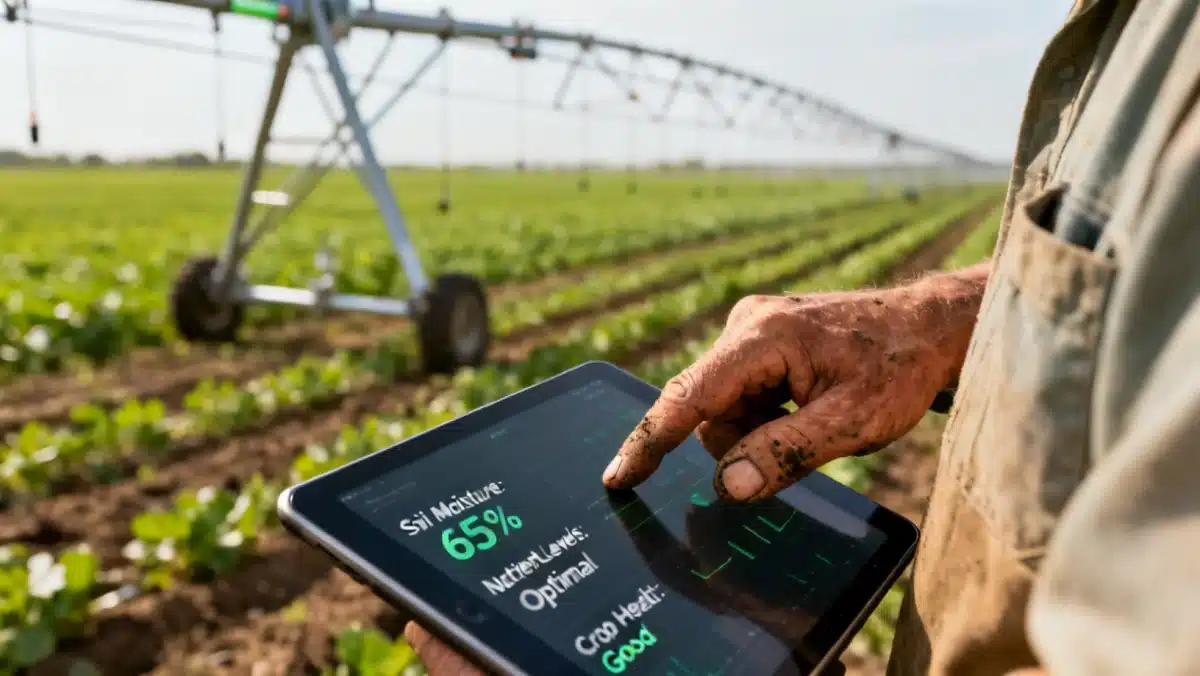
At its core, precision agriculture involves collecting and analyzing vast amounts of data from various sources. This data includes everything from soil composition and moisture levels to real-time weather patterns and crop health metrics. By understanding these variables at a granular level, farmers can tailor their interventions, ensuring that each part of their field receives exactly what it needs.
Advanced Sensor Technologies and IoT Integration
The proliferation of advanced sensors and the Internet of Things (IoT) has been a game-changer for precision agriculture. These devices provide continuous monitoring, offering insights that were previously unattainable. From in-field sensors to satellite imagery, the data streams are constant and comprehensive.
- Soil Moisture Sensors: Provide real-time data to optimize irrigation, preventing over- or under-watering.
- Nutrient Sensors: Detect specific nutrient deficiencies, enabling targeted fertilization and reducing waste.
- Weather Stations: Offer hyper-local forecasts and historical data, aiding in planting and harvesting decisions.
- Crop Health Monitors: Utilize spectral analysis to identify diseases or pests early, allowing for timely intervention.
The ability to monitor conditions minute-by-minute allows for dynamic adjustments, moving away from traditional, blanket approaches. This level of detail ensures resources are allocated precisely where they are most effective, which is a key factor contributing to the positive USDA 2026 Crop Yields outlook.
AI and Machine Learning in Crop Management
Artificial intelligence (AI) and machine learning (ML) algorithms are transforming raw data into actionable intelligence. These technologies can identify patterns, predict outcomes, and even automate decision-making processes, making farming more efficient and less labor-intensive.
AI-powered systems can analyze historical yield data alongside current environmental conditions to forecast future harvests with remarkable accuracy. They can also detect subtle changes in crop health that might be invisible to the human eye, flagging potential issues before they escalate. This predictive capability is invaluable for proactive crop management.
The integration of AI and ML extends to autonomous farm equipment, which can perform tasks like planting, spraying, and harvesting with minimal human oversight. This not only increases efficiency but also helps address labor shortages in the agricultural sector. The precision and consistency offered by these technologies are instrumental in achieving higher and more consistent yields.
In essence, precision agriculture, powered by sensors, IoT, AI, and ML, is creating a smarter, more responsive farming system. This holistic approach to crop management is a primary driver behind the anticipated increase in USDA 2026 Crop Yields, showcasing a future where technology and agriculture work hand-in-hand for greater productivity and sustainability.
Biotechnology and Genetic Advancements: Engineering for Resilience
Biotechnology and genetic engineering are playing an increasingly critical role in enhancing crop resilience and productivity, offering solutions to environmental challenges and improving nutritional value. These scientific breakthroughs are directly contributing to the optimistic USDA 2026 Crop Yields projections by developing crops that can thrive in diverse conditions.
Through advanced genetic manipulation, scientists are creating plants with inherent resistance to pests, diseases, and extreme weather conditions. This reduces the need for chemical interventions and minimizes crop losses, ensuring a more stable and abundant food supply. The focus is on building stronger, more adaptable crops from the ground up.
CRISPR and Gene Editing Technologies
CRISPR-Cas9 and other gene-editing tools represent a revolution in plant breeding. These technologies allow for precise modifications to plant DNA, enabling scientists to introduce desirable traits or remove undesirable ones with unprecedented accuracy and speed. This bypasses the slower, more traditional methods of selective breeding.
- Disease Resistance: Genes can be edited to confer immunity to common plant pathogens, reducing crop failures.
- Drought Tolerance: Modifying genes to improve water retention and utilization helps crops withstand prolonged dry spells.
- Enhanced Nutrient Uptake: Gene editing can improve a plant’s ability to absorb essential nutrients from the soil, leading to healthier growth.
- Improved Yield Potential: Traits linked to higher biomass production or larger fruit size can be selectively enhanced.
The ability to make such targeted changes means that new crop varieties can be developed much faster, responding to evolving environmental threats and market demands. This agility in crop development is a significant factor in the projected growth of USDA 2026 Crop Yields.
Development of Climate-Resilient Crops
As climate change continues to present challenges, the development of climate-resilient crops is paramount. Biotechnology is enabling the creation of plant varieties that can withstand fluctuating temperatures, increased salinity, and altered precipitation patterns. These crops are essential for maintaining food security in a changing world.
Researchers are focusing on traits such as heat tolerance, cold tolerance, and salt tolerance, which are crucial for farming in regions experiencing more extreme weather events. By incorporating these traits into staple crops, farmers can maintain productivity even under adverse conditions, safeguarding their livelihoods and the food supply.
Furthermore, genetic advancements are also being used to enhance the nutritional content of crops, addressing global malnutrition challenges. Biofortified crops, rich in essential vitamins and minerals, are becoming more common. This dual focus on resilience and nutritional improvement underscores the profound impact of biotechnology on the future of agriculture and its contribution to robust USDA 2026 Crop Yields.
Sustainable Practices and Resource Optimization: A Greener Future
The push for sustainable agriculture is not just an environmental imperative; it’s a strategic move to optimize resources and ensure long-term productivity. These practices are integral to the USDA’s optimistic forecast for 2026 Crop Yields, demonstrating a commitment to farming methods that benefit both the planet and the farmer’s bottom line.
Sustainable farming encompasses a range of techniques aimed at minimizing environmental impact, conserving natural resources, and maintaining soil health. By reducing waste and enhancing efficiency, these methods contribute directly to higher yields while simultaneously building a more resilient agricultural system.
Water Management Innovations
Efficient water management is critical in agriculture, especially in regions facing water scarcity. New technologies are transforming irrigation practices, ensuring that water is used judiciously and effectively. This reduces waste and maximizes its benefit to crops.
- Drip Irrigation Systems: Deliver water directly to the plant roots, minimizing evaporation and runoff.
- Smart Sprinkler Systems: Utilize sensors and weather data to adjust watering schedules automatically, optimizing water use.
- Recycled Water Use: Advanced filtration systems allow for the safe reuse of treated wastewater for agricultural purposes.
- Hydroponics and Aeroponics: Soilless farming methods that drastically reduce water consumption by recirculating nutrients.
These innovations are not only conserving precious water resources but also leading to healthier plants and increased yields. By making every drop count, farmers can achieve higher productivity even in water-stressed environments, directly impacting the positive outlook for USDA 2026 Crop Yields.
Soil Health and Regenerative Agriculture
Maintaining and improving soil health is fundamental to sustainable agriculture. Regenerative farming practices focus on rebuilding organic matter and biodiversity in the soil, leading to enhanced fertility, better water retention, and increased carbon sequestration. Healthy soil is the foundation of productive farming.
Techniques such as no-till farming, cover cropping, and diverse crop rotations are gaining widespread adoption. No-till farming minimizes soil disturbance, preserving its structure and microbial life. Cover crops protect the soil from erosion, add organic matter, and suppress weeds. Crop rotation breaks pest and disease cycles and improves nutrient cycling.
These practices not only improve soil quality over time but also reduce the need for synthetic fertilizers and pesticides, lowering input costs for farmers. The long-term benefits of regenerative agriculture contribute significantly to the sustainability and growth projected for USDA 2026 Crop Yields, ensuring that the land remains productive for generations to come.
Automation and Robotics: The Future Workforce on the Farm
The integration of automation and robotics is rapidly reshaping the agricultural workforce, addressing labor shortages, and enhancing efficiency across various farm operations. These advanced machines are not merely replacing human labor but are augmenting it, allowing for tasks to be performed with greater precision, speed, and consistency.
From planting and harvesting to monitoring and pest control, robotic systems are taking on increasingly complex roles. This technological shift is a key enabler for the projected increase in USDA 2026 Crop Yields, as it allows for optimized operations and reduced operational costs.
Autonomous Tractors and Drones
Autonomous tractors and agricultural drones are leading the charge in farm automation. These machines can navigate fields with GPS precision, performing tasks like plowing, seeding, and spraying with minimal human intervention. This frees up farmers to focus on strategic planning and management.
Drones, equipped with multispectral cameras and sensors, provide aerial surveillance of crops, identifying areas that need attention due to disease, pests, or water stress. They can also be used for targeted spraying of pesticides or fertilizers, reducing chemical use and environmental impact. The efficiency and accuracy offered by these autonomous systems are unparalleled.
The ability of autonomous tractors to operate around the clock, combined with the detailed insights provided by drones, ensures that farm operations are conducted optimally. This contributes significantly to maximizing crop health and yield potential, directly influencing the positive outlook for USDA 2026 Crop Yields.
Robotic Harvesters and Weeders
Robotic harvesters are revolutionizing the collection of delicate crops, such as fruits and vegetables, which traditionally require significant manual labor. These robots can identify ripe produce and pick it gently, reducing damage and increasing the speed of harvest. This is particularly beneficial for crops with short harvest windows.
Similarly, robotic weeders use computer vision and AI to differentiate between crops and weeds, precisely removing unwanted plants without disturbing the cultivated ones. This reduces the need for herbicides, promoting organic practices and healthier produce. The precision of robotic weeding also minimizes soil disturbance.
The adoption of robotic harvesters and weeders addresses critical labor challenges in agriculture, ensuring that crops are harvested efficiently and fields are kept clean. These advancements not only enhance productivity but also improve the quality of produce, making them vital components in achieving the anticipated robust USDA 2026 Crop Yields.
Ultimately, automation and robotics are transforming farming into a high-tech industry, making it more efficient, sustainable, and less reliant on manual labor. This evolution is crucial for meeting the growing global demand for food and securing the future of agriculture.
Data Analytics and Predictive Modeling: Smart Decision-Making
The agricultural sector is rapidly embracing data analytics and predictive modeling, transforming raw information into strategic insights that drive smarter decision-making. This shift towards data-driven farming is a cornerstone of the projected growth in USDA 2026 Crop Yields, allowing farmers to anticipate challenges and optimize their operations with unprecedented accuracy.
By analyzing vast datasets, farmers can gain a deeper understanding of their fields, crops, and environmental conditions. This knowledge empowers them to make proactive choices regarding planting, fertilization, irrigation, and pest management, moving away from reactive approaches that can be costly and inefficient.
Big Data in Agriculture
The sheer volume of data generated by modern farms—from sensors and drones to weather stations and market trends—constitutes ‘big data’ in agriculture. Managing and interpreting this data requires sophisticated tools and expertise. However, the insights gained are invaluable for optimizing every aspect of farm management.
- Yield Mapping: Identifies high and low-performing areas within a field, allowing for targeted improvements.
- Input Optimization: Analyzes historical data to determine optimal amounts of seeds, fertilizers, and pesticides.
- Market Trend Analysis: Helps farmers decide which crops to plant based on predicted demand and pricing.
- Risk Assessment: Evaluates potential threats like disease outbreaks or extreme weather, enabling contingency planning.
Leveraging big data allows for a holistic view of farm operations, revealing patterns and correlations that might otherwise go unnoticed. This comprehensive understanding is essential for making informed decisions that directly contribute to increased productivity and the positive outlook for USDA 2026 Crop Yields.
Predictive Analytics for Crop Health and Growth
Predictive analytics takes data analysis a step further by forecasting future outcomes based on current and historical data. For crop health and growth, this means anticipating potential problems before they arise and optimizing conditions for maximum yield.
Models can predict the onset of certain plant diseases based on weather patterns and environmental factors, allowing farmers to apply preventative treatments. They can also forecast crop growth stages, helping to time irrigation and fertilization precisely for optimal absorption and development. This proactive management significantly reduces losses and boosts overall yields.
Furthermore, predictive models can simulate different scenarios, such as the impact of varying fertilizer levels or planting densities, enabling farmers to experiment virtually before implementing changes in the field. This reduces risk and ensures that decisions are based on the most accurate predictions available. The power of predictive analytics is a major contributor to the anticipated rise in USDA 2026 Crop Yields, making farming more scientific and less reliant on guesswork.
Policy Support and Investment: Fueling Agricultural Innovation
Government policies and strategic investments are crucial in accelerating the adoption of new technologies and sustainable practices across the agricultural sector. Without robust support, the ambitious targets for USDA 2026 Crop Yields, driven by innovation, would be challenging to achieve. These initiatives create an enabling environment for growth and modernization.
From funding research and development to providing financial incentives for farmers, policy makers play a pivotal role in shaping the future of agriculture. Their commitment to fostering innovation ensures that the industry remains competitive, productive, and sustainable in the long term.
Government Incentives and Programs
Various government programs are designed to encourage farmers to adopt new technologies and sustainable farming practices. These incentives often come in the form of grants, subsidies, and tax breaks, making it more financially viable for farmers to invest in advanced solutions.
- Conservation Programs: Offer financial assistance for practices that improve soil health, water quality, and biodiversity.
- Technology Adoption Grants: Provide funding for purchasing precision agriculture equipment, sensors, and software.
- Research and Development Funding: Supports academic institutions and private companies in developing new agricultural innovations.
- Educational Initiatives: Offer training and resources to help farmers understand and implement new technologies effectively.
These programs are vital for de-risking the adoption of new technologies, especially for small and medium-sized farms. By reducing the financial burden, governments can accelerate the widespread implementation of innovations that are key to boosting USDA 2026 Crop Yields.
Public-Private Partnerships in Ag-Tech
Collaboration between public institutions and private companies is a powerful driver of agricultural technology development and deployment. These partnerships combine government resources and research capabilities with private sector innovation and market reach, fostering a dynamic ecosystem for Ag-Tech.
Public-private partnerships often focus on specific challenges, such as developing new drought-resistant crops or creating more efficient irrigation systems. By pooling expertise and funding, these collaborations can bring solutions to market faster and more effectively, benefiting the entire agricultural value chain.
Furthermore, these partnerships help bridge the gap between scientific discovery and practical application, ensuring that cutting-edge research translates into tangible tools and practices for farmers. The synergistic effect of these collaborations is a significant factor in the sustained growth and innovation expected to contribute to the impressive USDA 2026 Crop Yields.
Ultimately, strong policy support and strategic investments are indispensable for cultivating an agricultural sector that is technologically advanced, environmentally responsible, and economically robust. This foundation is critical for realizing the full potential of new technologies in farming.
Overcoming Challenges and Ensuring Equitable Growth
While the outlook for USDA 2026 Crop Yields is undeniably positive, driven by technological advancements, it is crucial to acknowledge and address the challenges that could impede equitable growth. Ensuring that all farmers, regardless of their scale or location, can benefit from these innovations is paramount for a truly sustainable future.
The digital divide, access to capital, and the need for continuous education are significant hurdles that must be overcome. A proactive approach to these issues will ensure that the agricultural revolution is inclusive and benefits the entire farming community.
Addressing the Digital Divide in Rural Areas
The effectiveness of many new agricultural technologies, particularly those involving data analytics and automation, relies heavily on robust internet connectivity. Unfortunately, many rural areas still lack reliable and affordable broadband access, creating a significant digital divide.
- Broadband Expansion Initiatives: Government and private sector efforts to extend high-speed internet to underserved rural communities.
- Affordable Technology Access: Programs to subsidize the cost of smart farming equipment and software for smaller farms.
- Offline Data Solutions: Developing technologies that can collect and process data offline, syncing when connectivity is available.
- Community Technology Hubs: Establishing shared access points for advanced agricultural tools and internet services.
Bridging this gap is essential to ensure that all farmers can leverage the power of precision agriculture, contributing to a more widespread increase in USDA 2026 Crop Yields and preventing the widening of disparities within the sector.
Training and Education for Farmers
The rapid evolution of agricultural technology necessitates continuous training and education for farmers. Operating sophisticated equipment and interpreting complex data requires new skills, and without adequate support, many farmers may struggle to adopt these innovations effectively.
Extension services, agricultural colleges, and private companies are playing a vital role in providing workshops, online courses, and hands-on training programs. These initiatives help farmers understand the benefits of new technologies and how to integrate them into their existing operations. The focus is on practical, accessible education that empowers farmers to embrace change.
Investing in farmer education is an investment in the future of agriculture. It ensures that the knowledge and skills required to operate modern farms are widely available, enabling a broader adoption of technologies that will drive the impressive USDA 2026 Crop Yields and sustain the industry’s growth for years to come.
By proactively addressing these challenges, the agricultural sector can ensure that the benefits of technological progress are shared equitably, fostering a resilient, innovative, and inclusive farming community for the future.
| Key Aspect | Impact on 2026 Crop Yields |
|---|---|
| Precision Agriculture | Optimizes resource use, reduces waste, and enhances crop management efficiency. |
| Biotechnology & Genetic Advancements | Develops climate-resilient, disease-resistant, and higher-yielding crop varieties. |
| Automation & Robotics | Increases operational efficiency, addresses labor shortages, and improves planting/harvesting precision. |
| Data Analytics | Enables smart, predictive decision-making for crop health, growth, and resource allocation. |
Frequently Asked Questions About 2026 Crop Yields
The primary driver is the widespread adoption and integration of new agricultural technologies, including precision farming, biotechnology, automation, and advanced data analytics. These innovations are significantly enhancing efficiency and productivity across the farming sector.
Precision agriculture uses sensors, IoT, and AI to optimize resource allocation like water and nutrients, tailoring interventions to specific field needs. This reduces waste, improves crop health, and maximizes productivity by making data-driven decisions.
Genetic advancements, such as CRISPR gene editing, create climate-resilient crops resistant to pests, diseases, and extreme weather. This minimizes crop losses and improves overall yield stability, adapting farming to environmental challenges.
Yes, significant challenges include the digital divide in rural areas lacking broadband access, the high initial cost of new equipment, and the need for continuous farmer training and education to effectively utilize these advanced systems.
Sustainable practices like regenerative agriculture and efficient water management are crucial. They improve soil health, conserve resources, and reduce environmental impact, contributing to higher yields while ensuring long-term ecological balance and productivity.
Conclusion
The USDA 2026 Crop Yields forecast of a 10% increase is a testament to the transformative power of technological innovation in agriculture. From the granular insights provided by precision farming and the resilience engineered through biotechnology, to the efficiency gains from automation and the strategic foresight offered by data analytics, every facet of farming is undergoing a profound evolution. While challenges such as the digital divide and the need for continuous education remain, sustained policy support and strategic investments are paving the way for a more productive, sustainable, and equitable agricultural future. This optimistic outlook underscores a pivotal moment where technology, sustainability, and human ingenuity converge to meet the growing global demand for food, ensuring a robust and resilient food supply for generations to come.