
The 2026 real estate market is anticipated to experience a nuanced 3% shift in national home values, influenced by evolving economic factors, interest rate adjustments, and regional supply-demand dynamics across the United States.
As we navigate the complexities of the current economic landscape, understanding the Real Estate Market Outlook 2026: Predicting a 3% Shift in National Home Values becomes paramount for homeowners, prospective buyers, and investors alike. Will the housing market continue its upward trajectory, or are we on the cusp of a significant adjustment? Let’s delve into the forecasts and underlying factors shaping the future of real estate.
Understanding the 2026 Real Estate Market Dynamics
The real estate market is a dynamic entity, constantly influenced by a myriad of economic, social, and demographic factors. As we look ahead to 2026, experts are coalescing around a projection of a roughly 3% shift in national home values. This isn’t a monolithic prediction of decline or boom, but rather a nuanced forecast reflecting a blend of continued moderation and localized performance. Several key drivers are expected to shape this outcome, including interest rate fluctuations, inflation, and the ongoing tug-of-war between housing supply and demand.
The resilience of the U.S. economy, despite various headwinds, provides a foundational layer of support for the housing sector. However, affordability challenges, particularly for first-time buyers, remain a significant hurdle. Understanding these interwoven elements is crucial for anyone looking to make informed decisions in the coming years. The market’s direction will not be uniform, with certain regions potentially outperforming or underperforming the national average.
Interest Rates and Their Impact on Affordability
Interest rates are undeniably one of the most influential factors in the housing market. Higher rates directly translate to increased monthly mortgage payments, thereby reducing purchasing power and making homeownership less accessible for many. The Federal Reserve’s monetary policy decisions will play a pivotal role in shaping the rate environment in 2026.
- Federal Reserve Policy: Anticipated adjustments to the federal funds rate will trickle down to mortgage rates, influencing borrowing costs.
- Inflation Control: The Fed’s ongoing battle against inflation will dictate the pace and extent of any rate changes.
- Borrower Behavior: Fluctuating rates can lead to shifts in buyer confidence and urgency, impacting demand.
Supply and Demand Imbalance
The persistent imbalance between housing supply and demand has been a defining characteristic of the U.S. real estate market for several years. While new construction has seen some increases, it has often struggled to keep pace with population growth and household formation. This scarcity, particularly in desirable urban and suburban areas, continues to exert upward pressure on prices, even amidst other moderating factors.
Conversely, a sustained period of high interest rates could eventually lead to some homeowners being reluctant to sell, further constraining inventory. This delicate balance will be a critical determinant of how the 3% shift in national home values materializes across different segments and geographies.
In summary, the 2026 real estate market will be a complex interplay of macroeconomic forces and localized conditions. While a 3% shift in national home values suggests a relatively stable, albeit slightly adjusted, market, the underlying dynamics of interest rates and supply-demand will be key to understanding regional nuances and individual opportunities.
Economic Indicators Shaping the 2026 Housing Landscape
The broader economic environment serves as the bedrock for the real estate market. Several key economic indicators are expected to significantly influence the 2026 housing landscape, dictating everything from consumer confidence to investment appetite. A keen eye on these metrics is essential for anticipating market movements and understanding the context of the predicted 3% shift in national home values.
Factors such as GDP growth, employment rates, and wage inflation all contribute to the overall health of the economy, which in turn impacts housing demand and affordability. A robust economy generally supports a strong housing market, while periods of economic uncertainty can introduce volatility. The interplay of these indicators will provide a clearer picture of the market’s trajectory.
GDP Growth and Employment Trends
Gross Domestic Product (GDP) growth is a fundamental measure of economic health. Sustained positive GDP growth typically indicates a thriving economy, which often translates to higher employment rates and increased consumer spending. For the real estate market, strong employment means more people have stable incomes, which is crucial for qualifying for mortgages and making home purchases.
Conversely, a slowdown in GDP or a rise in unemployment could dampen housing demand. The projections for 2026 suggest a moderate but steady economic growth, which should provide a supportive environment for the housing sector, albeit with some anticipated adjustments in valuation.
Inflation and Wage Growth
Inflation, while a concern for the broader economy, also has a direct impact on real estate. High inflation can erode purchasing power and push up the cost of construction materials, indirectly affecting housing supply and prices. However, if wage growth keeps pace with or outstrips inflation, consumers’ ability to afford homes can be maintained or even improved.
Analysts will be closely watching the balance between inflation and wage growth in 2026. If wages continue to rise, it could help offset some of the affordability challenges posed by higher interest rates and home prices, potentially mitigating a more significant downturn than the predicted 3% shift.
Understanding these economic indicators is vital. They provide the macro-level context for the micro-level decisions made by buyers and sellers. The anticipated 3% shift in national home values is not occurring in a vacuum; it is a reflection of these underlying economic currents. Monitoring these trends will offer valuable insights into the market’s stability and future direction.
Regional Variations and Local Market Insights
While a national forecast of a 3% shift in home values provides a broad overview, it’s crucial to remember that the U.S. real estate market is inherently local. What happens in one state or metropolitan area can be vastly different from another. Understanding these regional variations is key to making informed decisions, whether you’re buying, selling, or investing in 2026.
Different regions are influenced by unique factors, including local job markets, population migration patterns, available land for development, and specific state-level policies. These localized dynamics will determine how the national average manifests on the ground, creating pockets of stronger growth, stability, or even slight contractions.
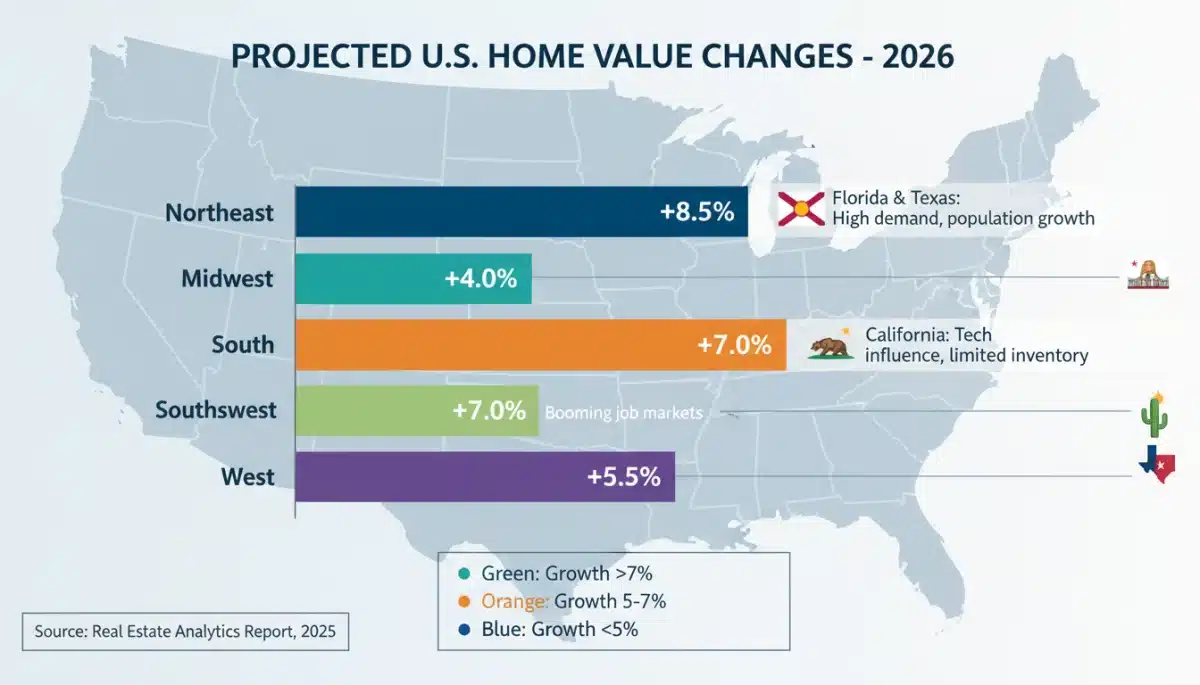
Sun Belt States: Continued Growth or Moderation?
The Sun Belt states, including Florida, Texas, and parts of the Southwest, have experienced significant population growth and robust housing demand over the past few years. This trend is expected to continue into 2026, though perhaps with some moderation. Strong job markets, lower taxes, and a generally more affordable cost of living (compared to coastal metros) have been powerful draws.
- Florida: Continued influx of retirees and remote workers, but potential for price stabilization after rapid appreciation.
- Texas: Diverse economy, strong corporate relocations, and relatively affordable housing sustaining demand.
- Arizona/Nevada: Vulnerability to interest rate sensitivity due to recent rapid growth and investor activity.
Coastal Metros: Stability Amidst High Costs
Major coastal metropolitan areas, such as those in California and the Northeast, often exhibit different market characteristics. These regions typically have high barriers to entry, limited land for new construction, and strong, established economies. While they tend to be less volatile in terms of large price swings, affordability remains a significant challenge.
In 2026, these markets are likely to see more modest shifts, potentially aligning closely with the national 3% forecast. Demand will remain strong among high-income earners, but the overall market will be constrained by ongoing affordability issues and the high cost of living.
Ultimately, a deep dive into local market data is indispensable. National averages provide a compass, but local insights offer the detailed map. Investors and homebuyers should research specific neighborhoods, employment trends, and future development plans within their target areas to truly understand the localized impact of the projected 3% shift in national home values for 2026.
Factors Influencing Housing Supply in 2026
The availability of homes for sale, or housing supply, is a critical component in determining market dynamics and ultimately, home values. For the real estate market outlook 2026, understanding the factors influencing housing supply is paramount, especially when predicting a 3% shift in national home values. A persistent shortage of homes can continue to push prices upward, while an increase in inventory could lead to greater balance or even downward pressure in some areas.
Several elements contribute to the overall housing supply, ranging from new construction rates to existing homeowners’ willingness to sell. These factors are interconnected and can create complex market conditions that vary significantly by region.
New Construction and Development Challenges
The pace of new home construction is a direct contributor to housing supply. While builders have been ramping up efforts in recent years, several challenges persist that could limit the extent of new inventory coming online by 2026. These include:
- Material Costs: Fluctuations in the cost of building materials can impact project feasibility and timelines.
- Labor Shortages: A persistent shortage of skilled construction labor can slow down building processes.
- Regulatory Hurdles: Zoning restrictions and lengthy permitting processes in many municipalities can hinder development.
- Land Availability: Scarce and expensive land, particularly in highly desirable areas, limits new construction potential.
These challenges suggest that while new construction will contribute to supply, it might not be enough to fully alleviate the existing housing deficit in many markets, thus sustaining some level of upward pressure on home values.
Existing Home Inventory and Homeowner Behavior
The majority of housing supply comes from existing homes put up for sale. Homeowner behavior, particularly their willingness to sell, is heavily influenced by interest rates and equity. Many current homeowners are locked into historically low mortgage rates, making them reluctant to sell and purchase a new home at a higher rate. This phenomenon, often referred to as the “lock-in effect,” can significantly constrain inventory.
If interest rates stabilize or decline slightly by 2026, it could encourage more homeowners to list their properties, thereby increasing supply. However, if rates remain elevated, the existing home inventory could stay tight, continuing to support home values. The balance between new construction and existing home sales will be a key indicator for the 2026 market.
In conclusion, the housing supply in 2026 will be shaped by a combination of new construction efforts facing various headwinds and the behavioral responses of existing homeowners to the prevailing interest rate environment. These factors will collectively contribute to how the predicted 3% shift in national home values plays out across different segments of the market.
Demographic Shifts and Buyer Behavior in 2026
Demographic shifts are powerful, long-term drivers of real estate trends, and their influence will be particularly noticeable in the real estate market outlook 2026. Understanding who is buying, where they’re moving, and what they prioritize is crucial for comprehending the predicted 3% shift in national home values. The evolving preferences and financial capabilities of different generations will shape demand patterns and impact various housing segments.
From the burgeoning influence of younger generations entering the market to the ongoing mobility of older demographics, these societal changes directly translate into housing needs and preferences, influencing everything from starter homes to luxury properties.
Millennials and Gen Z: The New Homebuyers
Millennials continue to represent a significant portion of first-time homebuyers, and as they age, many are looking to upgrade to larger homes. Following closely behind, Gen Z is beginning to enter the homeownership market, albeit often facing significant affordability challenges. These younger generations are characterized by:
- Digital Savvy: Rely heavily on online resources for home searches and market research.
- Location Preferences: Often seek walkable communities, access to amenities, and areas with strong job markets.
- Affordability Focus: Prioritize value and often require creative financing solutions or assistance from family.
Their collective demand will continue to be a major force in the market, pushing for more accessible and energy-efficient housing options. Their impact will be a key factor in how the 3% shift in home values is distributed across different price points and property types.
Remote Work and Migration Patterns
The lasting impact of remote and hybrid work models continues to influence where people choose to live. This has fueled migration from expensive urban centers to more affordable suburban and exurban areas, as well as to regions with a lower cost of living. This trend is expected to persist into 2026, redistributing demand across the country.
Areas that offer a combination of affordability, good infrastructure, and quality of life are likely to see sustained demand, potentially leading to stronger home value appreciation than the national average. Conversely, some traditional urban centers might experience more moderate growth as their desirability shifts for certain segments of the population.
In essence, the demographic landscape of 2026 will be a complex mosaic of generational aspirations and evolving lifestyle choices. These shifts will directly influence demand, shaping which types of homes are most sought after and contributing significantly to the nuanced 3% shift in national home values across different regions and property segments.
Investment Strategies and Opportunities in 2026
For investors, the real estate market outlook 2026 presents a landscape ripe with both challenges and opportunities, particularly with a predicted 3% shift in national home values. This environment necessitates a strategic approach, moving beyond broad market assumptions to focus on specific niches and informed decision-making. Investors will need to be agile, adapting their strategies to capitalize on regional strengths and mitigate potential risks.
The era of easy gains might be moderating, but opportunities for wealth creation through real estate persist for those who understand the underlying market dynamics and employ disciplined investment tactics. This means a greater emphasis on due diligence, understanding local markets, and potentially exploring alternative investment avenues.
Residential vs. Commercial Real Estate
The residential and commercial real estate sectors often follow different trajectories, influenced by distinct economic drivers. In 2026, residential real estate, despite the anticipated 3% shift, may still offer relative stability due to ongoing housing demand driven by demographic factors. However, affordability concerns could lead to increased demand for rental properties, making certain multi-family investments attractive.
Commercial real estate, on the other hand, faces its own set of challenges, particularly in the office sector due to remote work trends. However, industrial properties (warehouses, logistics centers) and certain retail segments (experiential retail, essential services) could present strong opportunities. Investors should carefully evaluate the specific sub-sectors within commercial real estate.
Emerging Markets and Niche Investments
Savvy investors in 2026 will likely look beyond traditional hotspots to emerging markets that show promising signs of growth. These could include:
- Secondary Cities: Cities with growing job markets, lower costs of living, and improving infrastructure.
- Build-to-Rent Communities: Addressing the demand for quality rental housing, especially among younger demographics.
- Specialized Properties: Data centers, medical offices, and senior living facilities, which cater to specific, growing needs.
- Sustainable Properties: Homes and buildings with energy-efficient features, appealing to environmentally conscious buyers and renters.
Diversification across different property types and geographic regions will be a prudent strategy. The 3% national shift is an average; significant deviations will occur at the local level, creating specific entry and exit points for discerning investors.
In conclusion, 2026 will demand a more nuanced and informed approach from real estate investors. Success will hinge on understanding the interplay of residential and commercial sectors, identifying emerging markets, and recognizing niche investment opportunities that align with evolving demographic and economic trends. A clear-eyed assessment of risk and reward, coupled with thorough market research, will be essential.
Navigating the Mortgage and Financing Landscape in 2026
The mortgage and financing landscape plays a pivotal role in the accessibility and affordability of housing, directly influencing the predicted 3% shift in national home values for 2026. For both homebuyers and investors, understanding the prevailing interest rate environment, lending standards, and available financing options will be critical to navigating the market successfully. The cost of borrowing significantly impacts purchasing power and overall market demand.
As economic conditions evolve, so too do the policies of lending institutions and the broader financial markets. Staying informed about these changes will enable individuals to secure the most favorable terms and make sound financial decisions in the context of the 2026 real estate market.
Interest Rate Projections and Mortgage Products
As discussed, interest rates are a primary determinant of mortgage affordability. While precise long-term forecasts are challenging, the consensus for 2026 suggests a potential stabilization or slight easing of rates compared to recent highs, though they are unlikely to return to the ultra-low levels seen during the pandemic. This stabilization could offer a more predictable borrowing environment.
Borrowers will need to consider various mortgage products:
- Fixed-Rate Mortgages: Offer stability with consistent monthly payments, a popular choice in fluctuating rate environments.
- Adjustable-Rate Mortgages (ARMs): May offer lower initial rates but come with the risk of future payment increases. Careful consideration of adjustment caps and periods is essential.
- Government-Backed Loans: FHA, VA, and USDA loans continue to provide accessible options for eligible borrowers, often with lower down payments or more flexible credit requirements.
Lending Standards and Down Payment Requirements
Lending standards are expected to remain relatively prudent in 2026. While not as stringent as immediately after the 2008 financial crisis, banks will continue to assess borrower creditworthiness, debt-to-income ratios, and employment stability carefully. This ensures a healthier housing market by reducing the risk of widespread defaults.
Down payment requirements will also remain a significant factor. While 20% is often considered ideal to avoid Private Mortgage Insurance (PMI), many programs allow for much lower down payments. First-time homebuyers, in particular, should explore down payment assistance programs and grants available at federal, state, and local levels. These programs can significantly reduce the upfront financial burden and help more individuals access homeownership, even with the anticipated 3% shift in home values.
In summary, successfully navigating the 2026 real estate market hinges on a clear understanding of the mortgage and financing landscape. By staying informed about interest rate trends, comparing various mortgage products, and exploring available assistance programs, both buyers and investors can optimize their financial strategies and achieve their real estate goals amidst the evolving market conditions.
| Key Market Factor | 2026 Outlook & Impact |
|---|---|
| National Home Values | Predicted 3% shift, indicating moderation rather than a sharp decline or boom. |
| Interest Rates | Expected stabilization or slight easing, influencing affordability and buyer behavior. |
| Housing Supply | New construction faces challenges; existing inventory influenced by “lock-in effect.” |
| Demographic Shifts | Millennials and Gen Z drive demand; remote work continues to influence migration. |
Frequently Asked Questions About the 2026 Real Estate Market
A 3% shift suggests a moderate adjustment in the market, not a drastic crash or boom. For homeowners, it means potential slight appreciation or depreciation depending on your local market. Buyers might find slightly more balanced conditions, but affordability will still be a key consideration.
While a significant drop to pre-pandemic lows is unlikely, experts anticipate a potential stabilization or slight easing of interest rates. This would offer more predictability for borrowers compared to recent volatility, improving affordability for some prospective buyers.