
Homeownership Benefits 2026 highlights pivotal first-time buyer programs and crucial mortgage relief options designed to empower aspiring homeowners across the United States.
Achieving homeownership remains a cornerstone of the American dream, offering stability, wealth building, and a sense of community. In 2026, understanding the array of Homeownership Benefits 2026, particularly first-time buyer programs and mortgage relief options, is more crucial than ever for aspiring homeowners navigating a dynamic housing market.
Understanding the Landscape of Homeownership in 2026
The housing market in 2026 presents both opportunities and challenges for potential homeowners. Economic shifts, interest rate fluctuations, and evolving demographic trends all play a significant role in shaping access to homeownership. For many, the dream of owning a home feels distant, but a comprehensive understanding of available programs can bridge this gap.
This section delves into the current state of the market, highlighting key factors that influence buying decisions and the overall accessibility of housing. It’s not just about finding a house; it’s about finding the right financial pathway to make that house a home.
Economic Influences on the 2026 Housing Market
Several economic indicators are particularly impactful for prospective buyers. Inflation, employment rates, and consumer confidence levels directly affect purchasing power and mortgage affordability. A stable economic outlook often correlates with a more accessible housing market, while uncertainty can lead to caution among both buyers and lenders.
- Interest Rate Trends: Monitoring federal interest rate policies is vital, as these directly influence mortgage rates and the overall cost of borrowing.
- Supply and Demand Dynamics: Local housing inventory levels significantly impact prices and competition, varying greatly across different regions of the United States.
- Inflationary Pressures: Higher inflation can erode savings and increase the cost of living, making it harder to accumulate a down payment.
Furthermore, technological advancements continue to streamline the home-buying process, from online listings and virtual tours to digital mortgage applications. These innovations, while convenient, also require buyers to be more informed and proactive in their search.
In conclusion, navigating the 2026 housing market requires a blend of financial literacy, strategic planning, and an awareness of economic forces. Understanding these elements lays the groundwork for effectively utilizing the various homeownership benefits available.
First-Time Buyer Programs: Your Gateway to Homeownership
For many individuals and families, the initial hurdle to homeownership is often the most significant. Fortunately, a robust ecosystem of first-time buyer programs exists to alleviate these challenges, offering financial assistance, educational resources, and favorable loan terms. These programs are designed to make the dream of owning a home a tangible reality.
These initiatives come from various sources, including federal, state, and local governments, as well as non-profit organizations. Each program typically has specific eligibility criteria and benefits, making it essential for prospective buyers to research what applies to their unique situation.
Federal Programs for First-Time Homebuyers
The federal government provides several cornerstone programs that have helped millions of Americans purchase their first homes. These programs are often characterized by lower down payment requirements and more flexible credit standards compared to conventional loans.
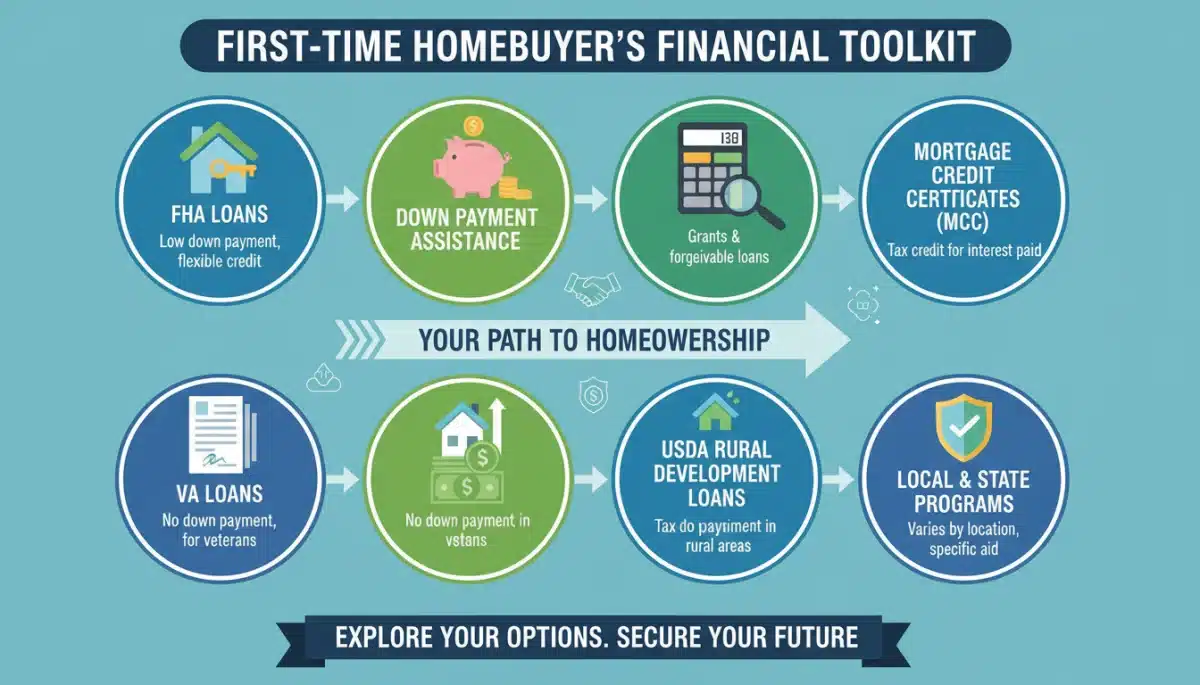
- FHA Loans: Backed by the Federal Housing Administration, these loans allow down payments as low as 3.5% and are ideal for buyers with less-than-perfect credit scores.
- VA Loans: Exclusive to eligible service members, veterans, and surviving spouses, VA loans offer 0% down payment options and no private mortgage insurance.
- USDA Loans: Designed for low-to-moderate income buyers in designated rural areas, USDA loans also offer 0% down payment options, promoting rural development.
Beyond these, government-sponsored enterprises like Fannie Mae and Freddie Mac also offer programs with low down payment options, such as the HomeReady and Home Possible mortgages, which cater to low-to-moderate income borrowers.
State and local programs often complement federal initiatives, providing additional down payment assistance, closing cost grants, or tax credits. These can significantly reduce the out-of-pocket expenses associated with purchasing a home.
In summary, first-time buyer programs are a critical resource, providing essential financial support and guidance. Leveraging these programs can transform the daunting prospect of purchasing a home into an achievable goal, fostering broader access to Homeownership Benefits 2026.
Navigating Mortgage Relief Options in 2026
Life can be unpredictable, and even the most diligent homeowners may face financial hardship that impacts their ability to make mortgage payments. Recognizing this, a variety of mortgage relief options are available in 2026 to help homeowners avoid foreclosure and maintain their housing stability. These programs aim to provide temporary or long-term solutions, depending on the nature and severity of the financial challenges.
Understanding these options is vital for any homeowner experiencing difficulties. Proactive engagement with lenders and housing counselors can open doors to solutions that might otherwise be overlooked, preventing potentially devastating outcomes.
Key Mortgage Assistance Programs
Several avenues exist for homeowners seeking relief. These range from temporary payment adjustments to more permanent loan modifications. The suitability of each option depends heavily on individual circumstances and the specific terms of the mortgage.
- Forbearance: This allows homeowners to temporarily pause or reduce mortgage payments for a set period, providing breathing room during short-term financial distress.
- Loan Modification: A permanent change to the original loan terms, which can include lowering the interest rate, extending the loan term, or reducing the principal balance, making payments more affordable.
- Repayment Plans: For those with temporary setbacks, a repayment plan allows homeowners to catch up on missed payments over a specific timeframe, alongside their regular mortgage payments.
Homeowners should also be aware of state and local housing agencies that often offer counseling services and connect individuals with resources. The Department of Housing and Urban Development (HUD) also sponsors housing counseling agencies that provide free or low-cost advice.
It is crucial to communicate with your mortgage servicer as soon as you anticipate or experience difficulty. Early intervention often leads to more favorable outcomes and a broader range of available relief options. Ignoring the problem can severely limit potential solutions.
In conclusion, mortgage relief options are essential safeguards for homeowners facing financial challenges. These programs underscore the broader commitment to supporting homeownership, ensuring that temporary setbacks do not lead to permanent loss of housing. Accessing these options is a key component of maximizing Homeownership Benefits 2026.
Long-Term Financial Benefits of Owning a Home
Beyond the immediate satisfaction of having a place to call your own, homeownership offers a multitude of long-term financial advantages that contribute significantly to personal wealth and stability. These benefits extend far beyond simply having a roof over your head, impacting everything from your net worth to your retirement planning.
Understanding these enduring advantages can further motivate prospective buyers and reinforce the value proposition of investing in real estate. It’s a strategic financial move that, when managed wisely, can yield substantial returns over time.
Building Equity and Wealth Accumulation
One of the most significant benefits of homeownership is the ability to build equity. As you make mortgage payments, a portion goes towards reducing your principal balance, increasing your ownership stake in the property. This equity can be a powerful financial tool.
- Appreciation: Over time, real estate generally appreciates in value, increasing your home’s equity without direct effort.
- Leverage: Home equity can be leveraged for future financial needs, such as home equity loans or lines of credit, for home improvements or other investments.
- Net Worth Growth: For most Americans, their home is their largest asset, significantly contributing to their overall net worth and financial security.
Furthermore, homeowners often benefit from tax deductions, such as those for mortgage interest and property taxes, which can reduce their overall taxable income. These deductions can represent substantial savings, particularly in the early years of a mortgage.
Predictable housing costs are another long-term advantage. While property taxes and insurance may fluctuate, a fixed-rate mortgage provides consistent principal and interest payments, offering stability that renting often lacks, especially in markets with rapidly increasing rents.
In summary, the long-term financial benefits of homeownership are profound, offering a pathway to wealth accumulation, financial stability, and significant tax advantages. These enduring aspects solidify the importance of exploring Homeownership Benefits 2026 for future prosperity.
State and Local Initiatives for Homebuyers in 2026
While federal programs provide a broad framework for homeownership assistance, state and local initiatives often offer tailored solutions that address specific regional needs and demographics. These programs can be particularly effective in bridging funding gaps, providing down payment assistance, and offering unique grants or tax credits that make homeownership more accessible at a local level.
It is crucial for potential homebuyers to investigate programs specific to their state, county, or even city, as these can significantly enhance the affordability of purchasing a home. These localized efforts are often designed to stimulate local economies and support community development.
Diverse Offerings from Local Governments and Agencies
State housing finance agencies (HFAs) are a primary source of assistance, offering a variety of programs that include low-interest mortgages, down payment assistance (DPA), and closing cost assistance. Many of these programs are designed to work in conjunction with federal loan types, such as FHA, VA, or USDA loans, maximizing benefits for the borrower.
- Down Payment Assistance (DPA): Grants or forgivable loans that help cover the upfront cost of a down payment, often a major barrier for first-time buyers.
- Mortgage Credit Certificates (MCCs): Allow homeowners to claim a portion of their annual mortgage interest as a dollar-for-dollar tax credit, significantly reducing their federal income tax liability.
- First-Time Homebuyer Bond Programs: State-issued bonds that fund lower-interest mortgages for eligible first-time homebuyers, making monthly payments more affordable.
Beyond financial aid, many local governments also offer homebuyer education courses. These courses equip prospective homeowners with essential knowledge about the purchasing process, loan types, and the responsibilities of homeownership, fostering informed decision-making.
Some communities also have specific programs targeting essential workers, such as teachers, police officers, and firefighters, providing additional incentives to live and work within the community. These programs recognize the vital role these professionals play in local society.
In conclusion, state and local initiatives are invaluable resources for homebuyers in 2026, offering specialized assistance that complements federal programs. Exploring these localized options can significantly enhance the affordability and accessibility of homeownership, proving that Homeownership Benefits 2026 are truly multifaceted.
Preparing for Homeownership: A 2026 Checklist
Embarking on the journey to homeownership requires careful planning and preparation. In 2026, a strategic approach can significantly improve your chances of securing favorable loan terms and navigating the competitive housing market successfully. This involves more than just saving for a down payment; it encompasses financial health, understanding the market, and preparing for the responsibilities of owning a home.
A well-thought-out checklist can help aspiring homeowners stay organized and focused on the key steps necessary to achieve their goal. This proactive stance ensures that when the right opportunity arises, you are ready to act swiftly and confidently.
Essential Steps for Prospective Homeowners
Before even looking at properties, several foundational financial steps should be taken. These steps build a strong profile for lenders and minimize potential roadblocks during the buying process.
- Improve Your Credit Score: A higher credit score translates to better interest rates and more favorable loan terms. Pay bills on time, reduce debt, and review your credit report for errors.
- Save for a Down Payment and Closing Costs: While many programs offer low or no down payment, having some savings provides flexibility and reduces your loan amount. Don’t forget closing costs, which can range from 2-5% of the loan amount.
- Get Pre-Approved for a Mortgage: Pre-approval gives you a clear understanding of what you can afford, strengthens your offer to sellers, and streamlines the buying process.
Beyond finances, educating yourself about the home-buying process is crucial. Attend homebuyer education workshops, research local market trends, and understand the different types of mortgages available. Knowledge empowers you to make informed decisions and avoid common pitfalls.
Consider the long-term commitment. Homeownership involves ongoing maintenance, property taxes, and insurance, all of which contribute to the total cost of ownership. Budgeting for these expenses is just as important as budgeting for your mortgage payment.
In summary, thorough preparation is paramount for successful homeownership in 2026. By addressing financial health, understanding market dynamics, and planning for ongoing costs, aspiring homeowners can confidently pursue and secure the numerous Homeownership Benefits 2026 has to offer.
The Future of Homeownership: Trends and Predictions for 2026 and Beyond
The landscape of homeownership is constantly evolving, influenced by technological advancements, demographic shifts, and policy changes. In 2026, several key trends are emerging that will shape how individuals access and maintain homeownership in the years to come. Understanding these future directions can help both current and aspiring homeowners prepare for what’s ahead and maximize their long-term benefits.
From sustainable housing solutions to innovative financing models, the future promises new opportunities and challenges. Staying informed about these trends is essential for making strategic decisions in the housing market.
Emerging Trends in Housing and Finance
One significant trend is the increasing focus on sustainable and energy-efficient homes. Buyers are becoming more aware of environmental impact and long-term utility costs, leading to a demand for green building practices and smart home technologies.
- Sustainable Housing: Growth in demand for eco-friendly homes with features like solar panels, efficient insulation, and water-saving systems.
- Digital Mortgage Processes: Further streamlining of mortgage applications and approvals through AI and blockchain technology, making the process faster and more transparent.
- Flexible Work Arrangements: The continued prevalence of remote work influencing housing demand in suburban and rural areas, potentially decentralizing urban housing markets.
Furthermore, demographic shifts, particularly the rise of Gen Z entering the housing market, will introduce new preferences and expectations. This generation often prioritizes affordability, digital convenience, and community amenities, which will likely influence development and lending practices.
Government policies will also continue to play a crucial role, with potential new incentives for affordable housing, first-time buyers, and sustainable home improvements. These policy shifts can create new opportunities for those seeking to enter or remain in the housing market.
In conclusion, the future of homeownership in 2026 and beyond is dynamic, driven by innovation and evolving societal needs. By staying attuned to these trends, individuals can better position themselves to leverage future Homeownership Benefits 2026 and adapt to the changing housing environment.
| Key Aspect | Brief Description |
|---|---|
| First-Time Buyer Programs | Federal, state, and local initiatives offering low down payments, grants, and favorable loan terms. |
| Mortgage Relief Options | Solutions like forbearance, loan modifications, and repayment plans to prevent foreclosure. |
| Long-Term Financial Gains | Equity building, property appreciation, and tax benefits contribute to wealth accumulation. |
| Preparation Checklist | Credit score improvement, savings for costs, and mortgage pre-approval for a smooth process. |
Frequently Asked Questions About 2026 Homeownership
The primary benefits include building equity and wealth through property appreciation, potential tax deductions for mortgage interest and property taxes, and establishing long-term financial stability with predictable housing costs. It also offers a sense of personal security and community engagement.
First-time buyers can access assistance through federal programs like FHA, VA, and USDA loans, as well as various state and local housing finance agencies. These typically offer low down payment options, grants for closing costs, and favorable interest rates. Researching local programs is key.
Homeowners facing financial hardship can explore options such as forbearance, which allows for temporary payment pauses; loan modifications to permanently alter loan terms; and repayment plans to catch up on missed payments. Contacting your mortgage servicer early is crucial for accessing these.
Yes, several programs target low-income buyers, including USDA loans for rural areas, FHA loans with low down payments, and various state and local down payment assistance programs. Many government-sponsored enterprises also offer specific products designed for low-to-moderate income individuals.
Key steps include improving your credit score, saving for a down payment and closing costs, getting pre-approved for a mortgage, and educating yourself on the home-buying process. Understanding the long-term financial responsibilities of homeownership is also vital for successful planning.
Conclusion
In 2026, the dream of homeownership remains a powerful aspiration for many Americans, bolstered by a diverse array of programs and relief options designed to make it more attainable. From federal and state first-time buyer initiatives to critical mortgage relief options, the resources available underscore a commitment to fostering housing stability and financial growth. By understanding and strategically utilizing these Homeownership Benefits 2026, aspiring homeowners can confidently navigate the market, secure their financial future, and realize the enduring advantages of owning a home.