
Three emerging degree programs are set to significantly impact 2026 higher education trends, reflecting evolving industry needs and technological advancements.
The landscape of higher education is constantly shifting, responding to global challenges and technological leaps. By 2026, we anticipate a significant evolution in academic offerings, with new disciplines taking center stage. This article provides a deep dive into three emerging degree programs that are not just trends, but foundational shifts in how we prepare for the future workforce.
The rise of sustainable urban development degrees
As urbanization accelerates worldwide, the demand for professionals capable of designing, managing, and sustaining smart, eco-friendly cities has skyrocketed. Degrees in Sustainable Urban Development are emerging as critical pathways for students passionate about environmental stewardship, social equity, and economic viability within urban contexts.
These programs typically integrate diverse fields such as environmental science, civil engineering, public policy, and urban planning. They equip graduates with the interdisciplinary knowledge and practical skills needed to address complex urban challenges, from climate change resilience to affordable housing and efficient transportation systems.
Curriculum focus and interdisciplinary approach
A core strength of these emerging degrees lies in their inherently interdisciplinary nature. Students don’t just learn about one aspect of urban life; they explore the intricate connections between various systems. This holistic approach is essential for creating truly sustainable solutions.
- Environmental Systems: Understanding ecological principles, resource management, and climate adaptation strategies.
- Social Equity and Planning: Addressing issues of community engagement, social justice, and equitable access to urban resources.
- Economic Development: Exploring sustainable business models, green economies, and financing mechanisms for urban projects.
- Policy and Governance: Navigating regulatory frameworks, urban policy-making, and public administration.
Graduates from these programs are highly sought after by municipal governments, non-profit organizations, international development agencies, and private consulting firms. They play a pivotal role in shaping the future of our cities, ensuring they are not only livable but also resilient and equitable for all residents.
The emphasis on practical, project-based learning within these degrees means students often work on real-world case studies and community projects, preparing them for immediate impact upon graduation. This hands-on experience is invaluable in a field that demands both theoretical understanding and actionable solutions.
Artificial intelligence and cognitive science integration
The rapid advancement of Artificial Intelligence (AI) is transforming every sector, creating an urgent need for professionals who understand both its technical capabilities and its profound implications for human cognition and society. Degrees integrating AI with Cognitive Science are at the forefront of this educational revolution.
These programs delve into the mechanics of intelligence, both artificial and natural, exploring how AI systems can be designed to mimic, augment, or even surpass human cognitive functions. Students learn about machine learning, deep learning, natural language processing, and robotics, alongside human perception, memory, decision-making, and language acquisition.
Bridging the gap between technology and humanity
The synergy between AI and cognitive science is crucial for developing ethical, user-friendly, and truly intelligent AI systems. Understanding human cognition helps engineers build AI that interacts more naturally with people and solves problems in ways that align with human values.
- Ethical AI Development: Addressing biases, privacy concerns, and the societal impact of AI technologies.
- Human-Computer Interaction: Designing intuitive interfaces and experiences that leverage cognitive principles.
- Neuroscience of AI: Exploring how AI models can be inspired by or inform our understanding of the brain.
- Computational Linguistics: Developing AI that can understand, generate, and process human language effectively.
Graduates are prepared for roles in AI research, data science, UX design, and even philosophical inquiry into the nature of intelligence. They are the architects of the next generation of AI, ensuring its responsible and beneficial integration into our lives.
This field is not just about programming; it’s about understanding the fundamental questions of intelligence itself. The demand for experts who can navigate this complex intersection will only grow as AI becomes more ubiquitous, making these programs incredibly valuable for the future workforce.
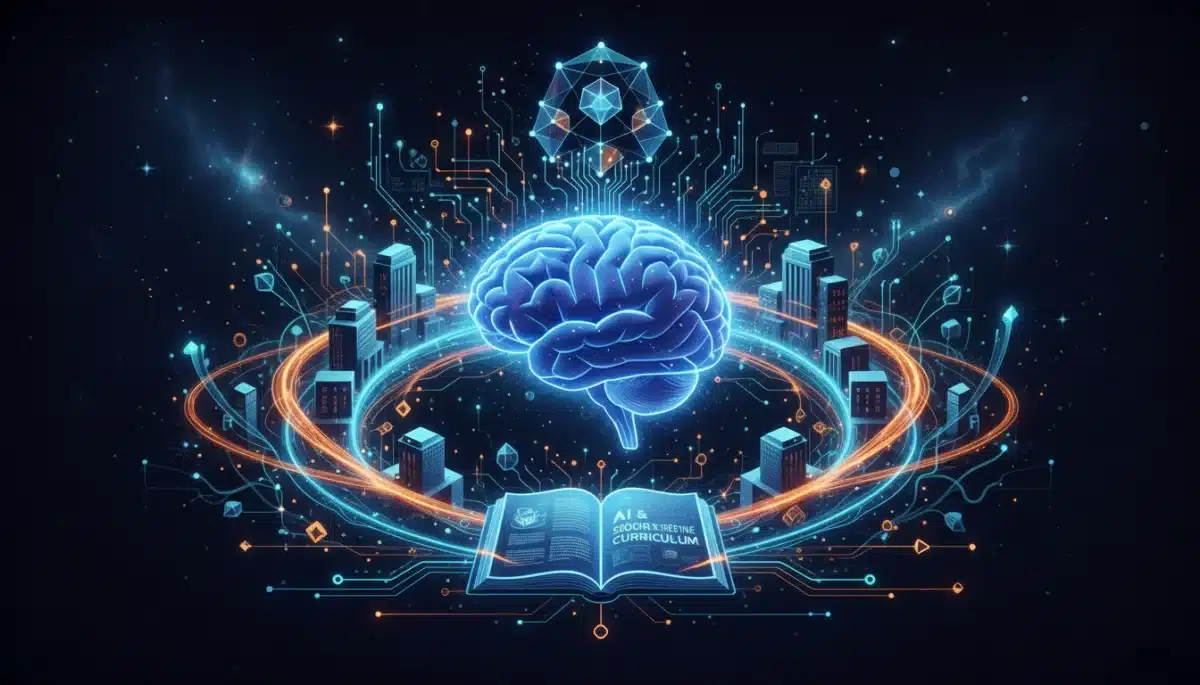
The integration of AI and cognitive science is paramount for ensuring that technological advancements serve humanity effectively. By fostering a deep understanding of both artificial and natural intelligence, these programs are cultivating a generation of innovators capable of building AI systems that are not only powerful but also ethical and aligned with human values.
Digital ethics and responsible technology governance
With the pervasive influence of digital technologies in our daily lives, concerns around data privacy, algorithmic bias, misinformation, and cyber security have escalated. This has led to the emergence of degrees in Digital Ethics and Responsible Technology Governance, designed to train leaders who can navigate the complex moral and regulatory landscapes of the digital age.
These programs bring together disciplines such as law, philosophy, computer science, and public policy. They focus on developing frameworks for ethical technology design, implementing robust data governance policies, and understanding the societal impact of digital innovations.
Navigating the moral maze of the digital age
The goal is to produce professionals who can critically assess the ethical implications of new technologies and guide organizations and governments in developing responsible digital strategies. This involves a deep understanding of both technological capabilities and human rights.
- Privacy and Data Protection: Understanding regulations like GDPR and developing ethical data handling practices.
- Algorithmic Fairness: Identifying and mitigating biases in AI algorithms to ensure equitable outcomes.
- Cybersecurity Ethics: Balancing national security concerns with individual liberties in the digital realm.
- Digital Policy Formulation: Crafting effective regulations for emerging technologies such as blockchain and virtual reality.
Graduates are essential for tech companies, government agencies, legal firms, and non-profit organizations that are grappling with the ethical challenges posed by rapid technological advancement. They serve as crucial advisors, helping to shape a digital future that is both innovative and just.
These degrees are not just about compliance; they are about foresight. They train individuals to anticipate future ethical dilemmas and proactively develop solutions, ensuring that technology serves humanity’s best interests rather than undermining them. The need for such expertise will only intensify as our reliance on digital systems grows.
Experiential learning and skill-based certifications
Beyond traditional degree structures, 2026 higher education trends show a significant shift towards experiential learning and skill-based certifications. This approach recognizes that the modern workforce demands not just theoretical knowledge, but demonstrable competencies and practical experience. Universities are increasingly integrating internships, co-op programs, simulations, and project-based coursework directly into their curricula.
These hands-on experiences allow students to apply classroom learning to real-world scenarios, fostering critical thinking, problem-solving abilities, and teamwork. Furthermore, the rise of micro-credentials and skill badges provides flexible pathways for learners to acquire specialized proficiencies that are directly relevant to industry needs, often in a shorter timeframe than a full degree.
The value of practical application
The emphasis on experiential learning ensures that graduates are job-ready from day one. Employers are increasingly valuing candidates who can show concrete examples of their skills in action, rather than just academic achievements.
- Internships and Co-ops: Providing direct industry exposure and professional networking opportunities.
- Simulations and Labs: Creating realistic environments to practice complex tasks and decision-making.
- Project-Based Learning: Working on multidisciplinary projects that mimic real-world challenges.
- Portfolio Development: Building a collection of demonstrable work to showcase skills to potential employers.
Skill-based certifications, often offered in partnership with industry leaders, validate specific technical or soft skills, making individuals more competitive in niche markets. This flexible learning model caters to a diverse student body, including working professionals looking to upskill or reskill.
This trend signifies a move towards a more dynamic and responsive education system, where learning is continuous and directly tied to employment outcomes. It’s about empowering individuals with the tools they need to adapt and thrive in an ever-changing job market, ensuring that higher education remains relevant and valuable.
Global collaboration and virtual learning ecosystems
The pandemic accelerated the adoption of virtual learning, but by 2026, this has evolved into sophisticated global collaboration and virtual learning ecosystems. Universities are no longer confined by geographical boundaries, offering truly international educational experiences through advanced digital platforms. This trend allows students to engage with diverse perspectives, work on global projects, and learn from faculty and peers across continents.
These ecosystems leverage immersive technologies like virtual reality (VR) and augmented reality (AR) to create engaging and interactive learning environments. They also facilitate seamless collaboration on research projects, shared courses, and cultural exchanges, enriching the educational journey for all participants.
Connecting minds across borders
Global collaboration fosters a deeper understanding of international issues and prepares students for a globalized workforce. Virtual ecosystems make this collaboration accessible and effective, breaking down traditional barriers to international education.
- Virtual Exchange Programs: Participating in courses and projects with students from international partner institutions.
- Cross-Cultural Research Teams: Collaborating on research with peers and faculty from different countries.
- Immersive Learning Environments: Using VR/AR for virtual field trips, lab simulations, and historical reconstructions.
- Global Guest Lecturers: Accessing expertise from leading professionals and academics worldwide.
The development of these virtual ecosystems also promotes digital literacy and adaptability, essential skills for any modern professional. Students learn to navigate diverse digital tools and communicate effectively in online, multicultural settings, preparing them for an increasingly interconnected world.
This trend democratizes access to high-quality education, allowing individuals from various backgrounds to participate in a global learning community. It underscores a future where education is not just about content delivery, but about fostering a worldwide network of learners and innovators.
Personalized learning pathways and adaptive technologies
The future of higher education in 2026 is increasingly centered on personalized learning pathways, powered by adaptive technologies. Recognizing that every student learns differently, universities are deploying AI-driven platforms that tailor educational content, pace, and assessment methods to individual needs and preferences. This approach aims to optimize learning outcomes, increase engagement, and reduce attrition rates.
Adaptive learning systems analyze student performance, identify areas of strength and weakness, and then adjust the curriculum in real-time. This allows for a more efficient and effective learning process, ensuring that students receive the right support at the right moment. It moves away from a one-size-fits-all model towards a highly individualized educational experience.
Tailoring education to individual needs
Personalized learning maximizes student potential by addressing their unique learning styles and academic challenges. Adaptive technologies make this scaleable and highly effective.
- AI-Powered Tutors: Providing instant feedback and customized explanations for complex topics.
- Dynamic Content Delivery: Adjusting learning materials based on student comprehension and progress.
- Competency-Based Progression: Allowing students to advance at their own pace once mastery is demonstrated.
- Data-Driven Insights: Providing educators with analytics to better understand student needs and refine teaching strategies.
This shift also empowers students with greater agency over their education, allowing them to pursue areas of interest more deeply and focus on developing specific skills. It fosters a sense of ownership and motivation, leading to more profound and lasting learning.
The integration of personalized learning and adaptive technologies represents a significant leap forward in educational pedagogy. It promises a future where higher education is more accessible, efficient, and ultimately, more effective in preparing individuals for their chosen paths, by adapting to their unique journey.
| Key Trend | Brief Description |
|---|---|
| Sustainable Urban Development | Interdisciplinary degrees preparing professionals for eco-friendly, equitable city planning. |
| AI & Cognitive Science Integration | Combining AI tech with human cognition for ethical, effective intelligent systems. |
| Digital Ethics & Governance | Training leaders to navigate moral and regulatory challenges of digital technologies. |
| Personalized Learning Pathways | AI-driven platforms tailoring content and pace to individual student needs. |
Frequently asked questions about higher education trends
New degree programs in 2026 are primarily driven by rapid technological advancements, evolving industry demands, global challenges like climate change, and the need for interdisciplinary solutions. Universities are adapting to prepare students for future-proof careers.
Emerging degrees often feature a stronger interdisciplinary focus, integrating multiple fields to solve complex problems. They also emphasize experiential learning, skill-based certifications, and a more adaptive, personalized approach compared to traditional, often more siloed programs.
Yes, online learning will continue to be a major trend, evolving into sophisticated global collaboration and virtual learning ecosystems. These platforms will leverage immersive technologies to offer international experiences and flexible learning pathways, expanding access to education.
AI plays a crucial role by enabling personalized learning pathways, adaptive content delivery, and intelligent tutoring systems. It also forms the core of new degree programs like AI and Cognitive Science, preparing students to develop and ethically manage advanced AI technologies.
Students can prepare by focusing on developing critical thinking, adaptability, and digital literacy. Exploring interdisciplinary interests, seeking out experiential learning opportunities, and staying informed about emerging technologies will also be beneficial for navigating future educational trends.
Conclusion
The landscape of higher education in 2026 is undergoing a profound transformation, marked by the emergence of innovative degree programs and pedagogical approaches. From Sustainable Urban Development to the intricate blend of AI and Cognitive Science, and the critical field of Digital Ethics, these new offerings reflect a proactive response to a world grappling with complex challenges and rapid technological shifts. Coupled with a growing emphasis on experiential learning, global collaboration, and personalized education, the future of higher learning promises to be more dynamic, relevant, and impactful than ever before. Students entering this evolving environment will find themselves equipped with the specialized knowledge and adaptable skills necessary to thrive and lead in the careers of tomorrow.