
The 2026 Tax Code Overhaul introduces significant changes impacting investment portfolios, necessitating proactive financial planning and strategic adjustments to optimize returns and mitigate potential liabilities.
The impending 2026 Tax Code Overhaul is poised to reshape the financial landscape for investors across the United States. Understanding these critical changes now is not just prudent; it’s essential for safeguarding and growing your wealth. This comprehensive guide will delve into five crucial modifications that could profoundly affect your investment portfolio, offering insights and strategies to navigate the evolving tax environment effectively.
Understanding the Looming 2026 Tax Code Overhaul
The year 2026 marks a pivotal moment for the U.S. tax system, as several provisions from the Tax Cuts and Jobs Act (TCJA) of 2017 are set to expire. This expiration triggers a reversion to previous tax laws unless new legislation is enacted. For investors, this isn’t merely a technical adjustment; it represents a fundamental shift in how investment gains, deductions, and various income streams will be treated, directly influencing portfolio performance and long-term financial planning.
Many of the expiring provisions were designed to stimulate economic growth through tax relief for individuals and businesses. Their sunsetting will likely lead to higher tax burdens for some, particularly those with significant investment income. Preparing for these changes involves more than just anticipating tax rates; it requires a holistic review of investment vehicles, asset allocation, and withdrawal strategies.
Key Expirations and Their Implications
Several critical components of the TCJA are slated to expire, impacting various aspects of investment. These include individual income tax rates, the standard deduction, and certain itemized deductions. The cumulative effect of these expirations can be substantial, altering the net returns on investments and potentially shifting the attractiveness of different asset classes.
- Individual income tax rates are expected to revert to pre-TCJA levels, generally higher across most brackets.
- The increased standard deduction will decrease, potentially making itemizing deductions more favorable for some.
- Limitations on certain itemized deductions, like the state and local tax (SALT) cap, may also change.
The overarching theme of the 2026 Tax Code Overhaul is increased complexity and a potential rise in tax liabilities for many investors. Proactive engagement with financial advisors and tax professionals will be paramount to navigate this intricate landscape successfully. Understanding the nuances of these changes can help investors make informed decisions that align with their financial goals.
Impact on Individual Income Tax Rates and Brackets
One of the most direct and widespread effects of the 2026 Tax Code Overhaul will be the adjustment of individual income tax rates and brackets. When the TCJA provisions expire, the marginal tax rates are expected to revert to higher levels, and the income thresholds for each bracket will also shift. This means that more of an investor’s income, including capital gains and dividends, could be taxed at a higher rate.
For many, this change will necessitate a reevaluation of their income-generating investments. Assets that produce ordinary income, such as interest from bonds or certain types of dividends, will feel the immediate impact of higher marginal tax rates. Investors might need to consider tax-advantaged accounts or income-producing assets with more favorable tax treatment.
Strategies for Mitigating Higher Income Taxes
To prepare for potentially higher income tax rates, investors can explore several strategic adjustments. Tax-loss harvesting, for instance, can become an even more valuable tool to offset capital gains and a limited amount of ordinary income. Additionally, contributions to tax-deferred accounts like 401(k)s and IRAs can help reduce current taxable income and allow investments to grow tax-free until retirement.
- Maximize contributions to tax-advantaged retirement accounts to defer income.
- Consider Roth conversions strategically, especially during potentially lower tax years.
- Explore municipal bonds for tax-exempt interest income at the federal level.
The expiration of current tax rates means that careful planning around when to realize gains or losses, and how to structure income generation, will be more crucial than ever. Understanding your personal tax bracket and how it might change will be the first step in developing an effective strategy to minimize the impact of these rate adjustments on your overall investment returns.
Changes to Capital Gains and Qualified Dividends
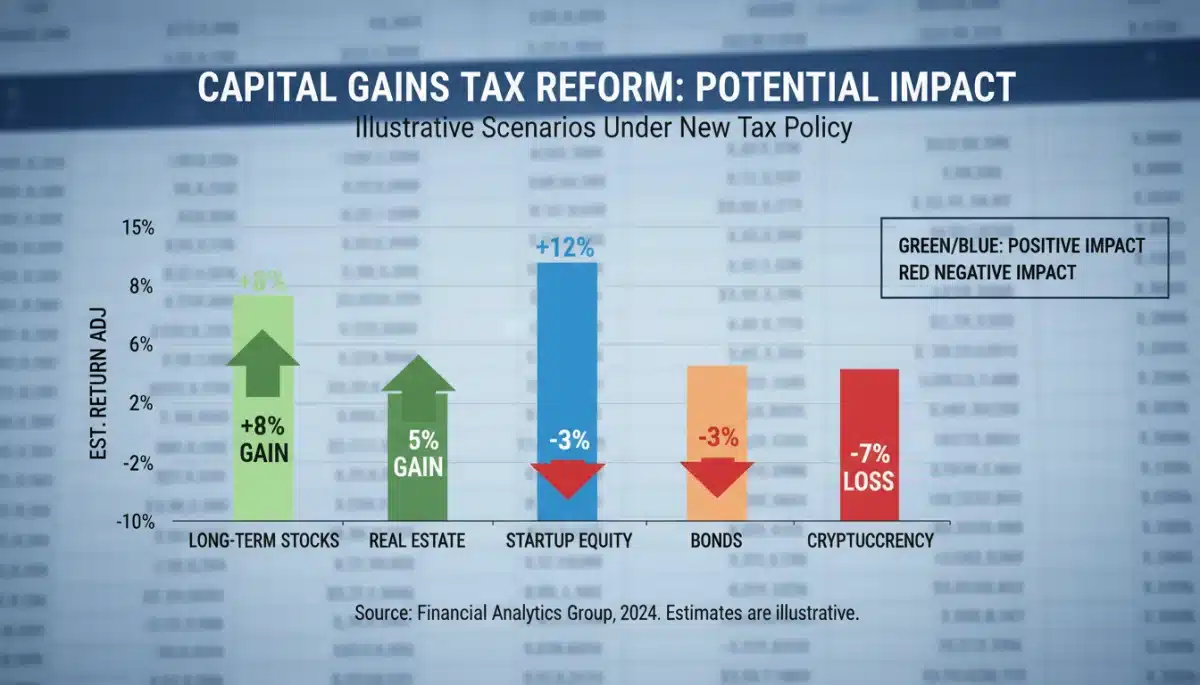
The 2026 Tax Code Overhaul is also expected to bring significant modifications to the tax treatment of capital gains and qualified dividends. Under current law, long-term capital gains and qualified dividends are subject to preferential tax rates, typically lower than ordinary income tax rates. With the expiration of TCJA provisions, these rates could increase, impacting the after-tax returns on many investment strategies.
Investors who rely heavily on selling appreciated assets or receiving qualified dividends will need to pay close attention to these potential shifts. An increase in capital gains tax rates could reduce the net profit from stock sales, real estate transactions, and other long-term investments. Similarly, higher taxes on qualified dividends could diminish the attractiveness of dividend-paying stocks as an income source.
Adapting Investment Strategies for Capital Gains
To navigate potential increases in capital gains taxes, investors may need to adjust their portfolio management. This could involve holding assets for longer periods to qualify for long-term capital gains treatment, if the distinction remains beneficial, or strategically timing asset sales to coincide with periods of lower overall income or favorable tax rates. Diversification into tax-efficient investments might also become more appealing.
- Re-evaluate the timing of significant asset sales to optimize tax outcomes.
- Consider tax-managed funds or exchange-traded funds (ETFs) for greater tax efficiency.
- Explore strategies like charitable giving with appreciated assets to potentially reduce capital gains.
The implications for qualified dividends are similar; investors might seek out investments that generate income in other, more tax-efficient ways, or simply adjust their expectations for after-tax dividend yield. Understanding the potential changes to these critical investment income streams is vital for maintaining portfolio growth and income generation in the post-2026 tax environment.
Estate and Gift Tax Implications for High-Net-Worth Individuals
For high-net-worth individuals, the 2026 Tax Code Overhaul will likely have profound implications for estate and gift taxes. The TCJA significantly increased the estate and gift tax exemption amounts, allowing individuals to transfer substantial wealth without incurring federal estate or gift taxes. Upon the expiration of these provisions, the exemption amounts are expected to revert to much lower levels, effectively broadening the reach of these taxes.
This change means that more estates will be subject to federal estate tax, and individuals will have less capacity to make large tax-free gifts during their lifetime. For those with substantial assets, this necessitates an immediate review of their estate plans, including wills, trusts, and gifting strategies. Without proactive planning, a significant portion of inherited wealth could be eroded by taxes.
Revising Estate Planning Strategies
To prepare for reduced estate and gift tax exemptions, high-net-worth individuals should consult with estate planning attorneys and financial advisors. Strategies might include accelerating gifts before 2026 to utilize the higher exemption amounts, establishing various types of trusts (such as irrevocable trusts) to remove assets from the taxable estate, or exploring charitable giving options.
- Utilize current higher gift tax exemptions by making substantial gifts before 2026.
- Review and update existing wills and trust documents to align with new tax laws.
- Consider life insurance policies as a tool to cover potential estate tax liabilities.
The reduction in exemption amounts will make comprehensive estate planning more critical than ever. It’s not just about minimizing taxes but also ensuring that wealth is transferred efficiently and according to the individual’s wishes, protecting legacies for future generations. Understanding these changes now allows for ample time to implement effective strategies.
Business Tax Changes Affecting Investment Vehicles
While often focused on individual taxpayers, the 2026 Tax Code Overhaul will also include several business tax changes that indirectly affect investment vehicles and strategies. Many pass-through entities, such as S corporations, partnerships, and sole proprietorships, currently benefit from a 20% qualified business income (QBI) deduction. This deduction is set to expire, which could increase the tax burden for owners of these entities.
For investors whose portfolios include significant holdings in pass-through businesses or those who derive substantial income from such ventures, the loss of the QBI deduction could impact their overall taxable income and, consequently, their investment capacity. This might lead to a reevaluation of business structures or a shift in investment focus towards other types of assets.
Navigating Business Tax Adjustments
To mitigate the impact of expiring business tax provisions, business owners and investors should consider various strategies. This might involve exploring alternative business structures, optimizing operational expenses, or maximizing other available deductions. Consulting with a tax professional specializing in business taxation will be essential to identify the most effective approaches for specific situations.
- Evaluate the tax implications of different business structures (e.g., C-corp vs. S-corp) post-2025.
- Focus on maximizing other business deductions and credits to offset increased income.
- Consider investments that are less directly tied to pass-through business income if the QBI deduction is crucial.
The interconnectedness of business and personal finances means that changes in one area inevitably ripple into the other. Investors must understand how these business tax adjustments could affect their overall financial picture and adapt their investment strategies accordingly to maintain optimal growth and tax efficiency.
Strategic Asset Allocation and Portfolio Adjustments
Given the multifaceted nature of the 2026 Tax Code Overhaul, a critical component of preparation is a thorough review of strategic asset allocation and the implementation of necessary portfolio adjustments. The changing tax landscape might alter the relative attractiveness of different asset classes, necessitating a rebalancing of one’s investment mix to optimize after-tax returns.
For instance, if capital gains taxes increase significantly, investments that generate income through tax-deferred growth or tax-exempt interest might become more appealing. Conversely, if ordinary income tax rates rise, certain high-yield taxable bonds might lose some of their luster. The goal is to align your portfolio with the new tax realities while still pursuing your long-term financial objectives.
Implementing Portfolio Adjustments
Making strategic portfolio adjustments involves more than just reacting to tax changes; it requires a forward-looking approach. This could include increasing allocations to tax-advantaged accounts, exploring alternative investments with different tax treatments, or focusing on growth stocks that prioritize appreciation over immediate dividend income. Regular reviews with a financial advisor will be key to ensuring your portfolio remains optimized.
- Increase contributions to Roth IRAs or 401(k)s for tax-free growth and withdrawals in retirement.
- Diversify into municipal bonds for tax-exempt income, especially in higher tax brackets.
- Consider tax-efficient investment vehicles like annuities for deferred growth.
The 2026 Tax Code Overhaul presents both challenges and opportunities. By proactively assessing your current asset allocation and making informed adjustments, you can position your investment portfolio to thrive in the evolving tax environment. This strategic approach ensures that tax efficiency remains a cornerstone of your long-term financial success.
| Key Change | Investment Impact |
|---|---|
| Individual Tax Rates | Higher rates may reduce after-tax investment income. |
| Capital Gains & Dividends | Increased rates could lower net profits from asset sales and dividends. |
| Estate & Gift Tax Exemptions | Reduced exemptions mean more wealth subject to federal transfer taxes. |
| QBI Deduction (Businesses) | Expiration impacts pass-through entity owners’ taxable income. |
Frequently Asked Questions About the 2026 Tax Changes
The primary driver is the expiration of key provisions from the Tax Cuts and Jobs Act (TCJA) of 2017. These provisions, which included individual income tax rate reductions and increased standard deductions, were set to sunset at the end of 2025, leading to a reversion to pre-TCJA tax laws in 2026 unless new legislation is passed.
The overhaul is expected to increase capital gains tax rates, particularly for long-term gains. This means that profits from the sale of assets held for over a year, such as stocks or real estate, could be taxed at higher rates, reducing your net returns. Investors should review their selling strategies and consider tax-efficient alternatives.
Yes, adjusting retirement contributions is a prudent strategy. Maximizing contributions to tax-deferred accounts like 401(k)s and traditional IRAs can help reduce your current taxable income. Additionally, considering Roth conversions now might be beneficial if you anticipate higher personal income tax rates in the future, as Roth withdrawals are tax-free in retirement.
High-net-worth individuals will likely see a significant reduction in the estate and gift tax exemption amounts. This means a larger portion of their wealth could be subject to federal estate tax. Proactive estate planning, including accelerated gifting and trust establishment, is crucial to mitigate potential tax liabilities and preserve wealth for heirs.
While challenging, the overhaul can create new opportunities. For instance, municipal bonds may become more attractive due to their tax-exempt interest. Investors might also explore tax-managed funds or focus on growth-oriented investments within tax-advantaged accounts to defer or minimize tax liabilities. Consulting a financial advisor is key to identifying personalized opportunities.
Conclusion
The 2026 Tax Code Overhaul represents a critical juncture for investors, demanding a proactive and informed approach to financial planning. The anticipated changes to individual income tax rates, capital gains, qualified dividends, estate and gift taxes, and business-related deductions will undoubtedly reshape the investment landscape. By understanding these five crucial areas, investors can work with their financial and tax advisors to develop robust strategies, optimize their portfolios, and ensure their financial objectives remain on track in the evolving tax environment. The time to prepare is now, transforming potential challenges into opportunities for strategic growth and wealth preservation.