
Understanding student loan debt in 2026 is crucial, as new repayment options and potential 0.5% interest rate shifts will redefine borrower strategies.
As we look towards 2026, the landscape of student loan debt in 2026 is poised for significant shifts. Borrowers in the United States are eager to understand how new repayment options and potential 0.5% interest rate changes might impact their financial futures.
The evolving landscape of student loan debt
The burden of student loan debt has been a persistent challenge for millions of Americans, shaping economic decisions and life trajectories. As we approach 2026, federal and private lenders are responding to calls for more flexible and sustainable repayment solutions.
This evolving environment reflects a broader understanding of the economic pressures faced by graduates and former students. Policymakers and financial institutions are exploring various avenues to alleviate stress, foster economic growth, and ensure that higher education remains an accessible pathway to opportunity, rather than a gateway to overwhelming debt.
Historical context and current trends
To fully grasp the implications of 2026’s potential changes, it’s essential to consider the historical trajectory of student loan debt. Over the past few decades, tuition costs have surged, outpacing inflation and wage growth, leading to a dramatic increase in borrowing.
- The average student loan debt has consistently risen, reaching unprecedented levels.
- Default rates, while fluctuating, remain a concern, highlighting the need for better support structures.
- The economic impact of student debt extends beyond individual borrowers, affecting housing markets and consumer spending.
Current trends indicate a move towards more borrower-centric policies, driven by both advocacy groups and a recognition of the systemic issues at play. The aim is to create a more equitable and manageable system for future generations of students.
The landscape of student loan debt is a dynamic one, constantly reacting to economic conditions and legislative actions. Understanding these foundational elements is key to appreciating the significance of the impending changes in repayment structures and interest rates.
New repayment options on the horizon
Anticipation is building around the introduction of new repayment options designed to offer greater flexibility and relief to borrowers. These programs aim to address the diverse financial situations of individuals, moving beyond one-size-fits-all solutions that often proved inadequate.
The proposed changes are expected to be more adaptive, considering income fluctuations and life events that can impact a borrower’s ability to make consistent payments. This shift represents a crucial step towards a more humane and effective approach to managing educational debt.
Income-driven repayment (IDR) enhancements
One of the most significant areas of reform is expected to be in Income-Driven Repayment (IDR) plans. These plans link monthly payments to a borrower’s income and family size, offering a safety net for those with lower earnings relative to their debt.
- Expanded eligibility criteria for existing IDR plans are being considered.
- Simplified application and recertification processes could reduce administrative burdens.
- Potential for faster loan forgiveness after a certain number of qualifying payments.
These enhancements are critical for ensuring that IDR plans truly serve their purpose: preventing defaults and providing a pathway to financial stability. By making IDR plans more accessible and effective, a significant portion of the borrowing population could experience substantial relief.
Beyond IDR, discussions include new hybrid models that combine elements of standard repayment with income-based adjustments, or even programs that focus on specific professions. The goal is a more comprehensive suite of options that cater to the unique circumstances of each borrower, ultimately fostering greater financial resilience.
Potential 0.5% interest rate changes and their impact
One of the most talked-about potential shifts for 2026 is a possible 0.5% change in student loan interest rates. While seemingly small, such an adjustment could have far-reaching implications for both new and existing borrowers, affecting the total cost of their education significantly.
Interest rates are a critical component of loan repayment, directly influencing the principal amount that accumulates over time. Even a minor percentage change can translate into thousands of dollars over the lifetime of a loan, making this a pivotal area of focus for anyone with student debt.
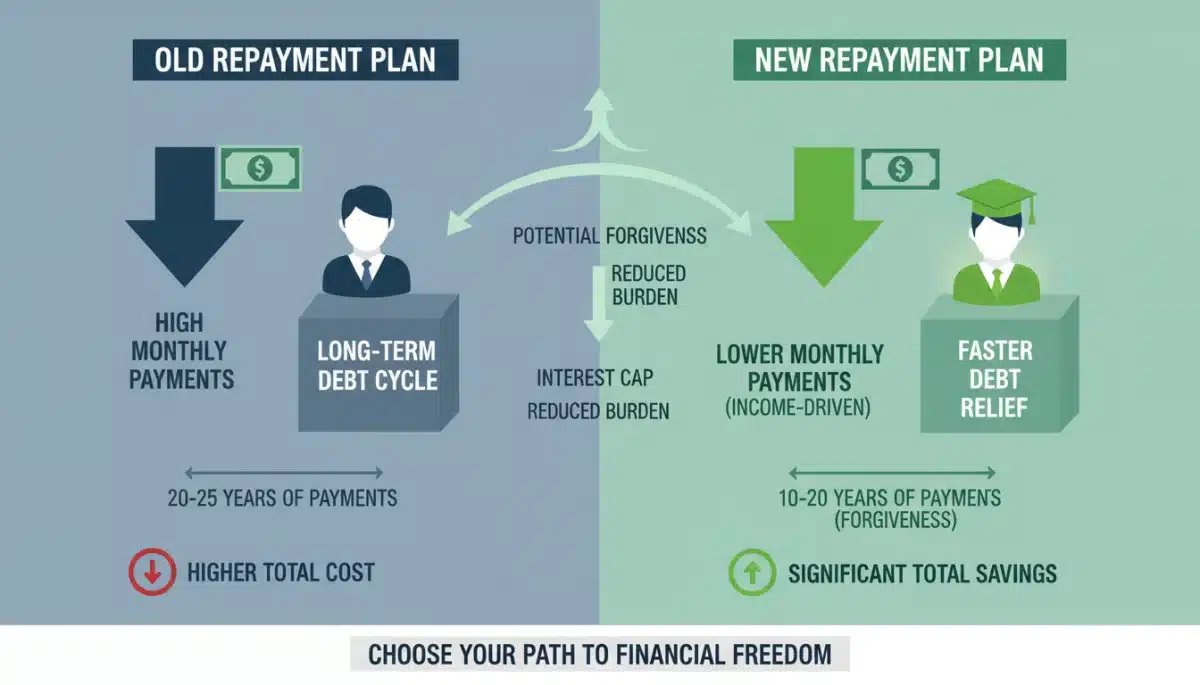
The exact nature of this change—whether an increase or decrease—remains a subject of debate and economic forecasting. However, understanding the potential consequences of either scenario is vital for effective financial planning.
Analyzing a 0.5% rate reduction
Should interest rates decrease by 0.5%, borrowers would experience immediate benefits. This reduction would lower monthly payments and decrease the overall amount of interest paid over the life of the loan. For someone with a substantial loan balance, this could mean significant savings.
- Reduced monthly payments, freeing up disposable income.
- Lower total cost of borrowing, making debt more manageable.
- Increased financial flexibility for other investments or savings.
A rate reduction could also stimulate the economy by giving borrowers more financial freedom, potentially leading to increased consumer spending and investment. It would be a welcome relief for many struggling under the weight of high-interest debt.
Strategies for navigating student loan debt in 2026
With the impending changes in repayment options and potential interest rate adjustments, borrowers need to be proactive in developing strategies to manage their student loan debt effectively in 2026. This involves staying informed, evaluating personal financial situations, and making informed decisions about the best path forward.
A well-thought-out strategy can mean the difference between struggling with debt and successfully navigating it towards financial freedom. It requires a combination of knowledge, discipline, and a willingness to adapt to new opportunities.
Understanding your loan portfolio
The first step in any effective strategy is to have a clear understanding of your current loan portfolio. This includes knowing the types of loans you have (federal vs. private), their interest rates, and their current repayment statuses.
- Identify all your loan servicers and their contact information.
- Consolidate or refinance loans if it makes financial sense and if new options allow.
- Track your payment history and remaining balances diligently.
Knowing these details will allow you to accurately assess which new repayment options might apply to you and how potential interest rate changes could impact your specific loans. This foundational knowledge is indispensable for informed decision-making.
Beyond understanding your loans, it’s crucial to assess your personal financial situation, including your income, expenses, and other debts. This holistic view will help you determine how much you can realistically afford to pay towards your student loans each month and identify areas where you might be able to save.
Preparing for the future: what borrowers should do now
While 2026 might seem a ways off, proactive preparation is key to maximizing the benefits of new repayment options and mitigating any adverse effects of interest rate changes. Borrowers should begin taking steps now to position themselves for success.
Waiting until the last minute can lead to missed opportunities or rushed decisions that may not be in your best financial interest. Early preparation allows for thoughtful planning and a more confident approach to managing your student loan debt.
Monitor legislative developments and announcements
Stay informed about any legislative proposals, policy changes, and official announcements from the Department of Education or other relevant financial bodies. Government websites and reputable financial news outlets are excellent sources of up-to-date information.
Subscribing to newsletters from your loan servicer or financial aid organizations can also provide timely updates directly to your inbox. Being aware of the latest developments ensures you don’t miss out on new programs or critical deadlines.
Additionally, consider consulting with a financial advisor specializing in student loan debt. They can provide personalized advice based on your unique situation and help you navigate the complexities of the evolving landscape. Their expertise can be invaluable in making strategic decisions that align with your long-term financial goals.
Reviewing your budget and financial habits now can also provide a head start. Identifying areas where you can cut expenses or increase income can create a buffer that makes adapting to new repayment plans or interest rate adjustments easier.
Long-term outlook for student loan debt management
The changes anticipated for student loan debt in 2026 are not isolated events but rather part of a broader, ongoing effort to reform the student loan system. The long-term outlook suggests a continued emphasis on borrower support, financial literacy, and sustainable repayment pathways.
This long-term perspective is crucial for borrowers to understand that managing student debt is an marathon, not a sprint. The strategies and options available will continue to evolve, requiring ongoing engagement and adaptation.
Advocacy and future reforms
Advocacy groups and policymakers are likely to continue pushing for further reforms beyond 2026. These efforts may include calls for tuition regulation, increased federal funding for grants, and more comprehensive loan forgiveness programs.
- Continued pressure for more affordable higher education.
- Exploration of universal income-driven repayment frameworks.
- Emphasis on financial education for students at all levels.
These discussions reflect a societal recognition that access to education should not come at the cost of crippling debt. The goal is to create a system where higher education is truly an investment in human capital, rather than a source of financial hardship.
For borrowers, this means staying engaged with the conversation and being prepared for future changes. Building a strong financial foundation now will enable greater flexibility and resilience, regardless of how the student loan landscape continues to evolve in the years to come.
Ultimately, the long-term outlook for student loan debt management involves a collaborative effort between borrowers, institutions, and government to foster a more equitable and sustainable system for all.
| Key Point | Brief Description |
|---|---|
| New Repayment Options | Expected to offer greater flexibility, potentially enhancing Income-Driven Repayment (IDR) plans. |
| 0.5% Interest Rate Change | A potential 0.5% adjustment could significantly impact monthly payments and total loan cost. |
| Proactive Preparation | Borrowers should monitor legislative changes and understand their loan portfolio now. |
| Long-Term Outlook | Continued focus on borrower support and sustainable debt management beyond 2026. |
Frequently asked questions about student loan debt in 2026
Major changes anticipated for 2026 include new repayment options, particularly enhancements to Income-Driven Repayment plans, and a potential 0.5% adjustment to interest rates. These aim to provide greater flexibility and relief to borrowers, making debt management more sustainable.
A 0.5% interest rate change, whether an increase or decrease, can significantly impact your monthly payments and the total amount of interest paid over the life of your loan. A reduction would save you money, while an increase would raise your costs.
To prepare, borrowers should stay informed about legislative developments, understand their current loan portfolio, and consider consulting a financial advisor. Proactive monitoring and financial planning will help you adapt effectively to the new landscape.
Many of the proposed new repayment options, especially within Income-Driven Repayment plans, are expected to include simplified application and recertification processes. This aims to reduce administrative burdens and make these beneficial programs more accessible to eligible borrowers.
Generally, federal student loan changes, such as new repayment options and interest rate adjustments from government policy, do not directly apply to private student loans. Private loan terms are set by individual lenders, though the overall market might influence private loan offerings.
Conclusion
The anticipation surrounding student loan debt in 2026 highlights a critical juncture for millions of Americans. With new repayment options and potential 0.5% interest rate changes on the horizon, borrowers have a unique opportunity to reassess their financial strategies. Staying informed, understanding personal loan portfolios, and proactively preparing for these shifts will be paramount in navigating the evolving landscape of student debt. These changes signify a continued effort to make higher education more accessible and its financial aftermath more manageable, fostering a healthier economic future for individuals and the nation.