The 2026 framework for special education introduces a three-tiered system designed to provide comprehensive support for students with diverse learning needs, enhancing early intervention and individualized services across US schools.
As we approach 2026, significant changes are coming to how special education services are delivered and understood across the United States. The new framework introduces a structured approach, emphasizing early intervention and tailored support. This article will delve into New for 2026: Understanding the 3 Tiers of Special Education Services and Eligibility, providing clarity on what these changes mean for students, parents, and educators.
understanding the new special education landscape for 2026
The education system is constantly evolving, and 2026 marks a pivotal year for special education. This updated approach aims to streamline services, ensuring that every student receives the appropriate level of support tailored to their individual needs. It’s a move towards a more proactive and inclusive educational environment, designed to foster academic success and personal growth.
The core philosophy behind these changes is to prevent learning gaps from widening and to provide timely interventions. By categorizing support into distinct tiers, schools can better allocate resources and implement strategies that are both effective and efficient. This structured system is expected to improve outcomes for students with disabilities, offering a clearer pathway for identification, assessment, and intervention.
the rationale behind tiered systems
Tiered intervention models are not entirely new to education, often seen in Response to Intervention (RTI) or Multi-Tiered System of Supports (MTSS) frameworks. However, the 2026 changes specifically formalize this structure within special education eligibility and service provision. The goal is to:
- Identify student needs earlier.
- Provide evidence-based interventions.
- Reduce the number of students unnecessarily referred for special education evaluations.
- Ensure more equitable access to support services.
This systematic approach helps educators make informed decisions based on data, leading to more precise and effective interventions. It also encourages collaboration among general education teachers, special education teachers, and support staff, creating a holistic support network for students.
In essence, the 2026 framework for special education is about creating a more responsive and adaptive system. It acknowledges that student needs vary widely and that a one-size-fits-all approach is often insufficient. By implementing these three tiers, the aim is to create a more supportive and effective educational journey for all students, particularly those requiring specialized assistance.
tier 1: universal supports and general education
Tier 1 represents the foundational level of support within the new 2026 special education framework. This tier encompasses the high-quality, evidence-based instruction and supports provided to all students within the general education classroom. The philosophy here is that a strong general education program can meet the needs of most students, including many who might have mild learning challenges.
Effective Tier 1 instruction is crucial because it can prevent many students from needing more intensive interventions. It emphasizes inclusive practices, differentiated instruction, and universal design for learning (UDL) principles, ensuring that the curriculum is accessible to a wide range of learners from the outset. This proactive approach minimizes the need for specialized services down the line.
key components of tier 1 support
For Tier 1 to be successful, schools must focus on several critical elements:
- High-Quality Core Instruction: All students receive instruction that is research-based, engaging, and delivered by highly qualified teachers.
- Differentiated Instruction: Teachers adapt their teaching methods and materials to meet the diverse learning styles and needs present in the classroom.
- Positive Behavior Interventions and Supports (PBIS): School-wide systems are in place to promote positive behavior and create a safe learning environment.
- Universal Screening: Regular assessments are conducted for all students to identify those who may be at risk for academic or behavioral difficulties.
These components work together to create a robust learning environment where all students have the opportunity to succeed. The data collected from universal screenings helps educators identify students who might benefit from additional support, signaling when a student might need to move to Tier 2 interventions.
The success of Tier 1 is paramount to the overall effectiveness of the tiered system. When general education is strong and inclusive, it reduces the burden on higher tiers and ensures that those who truly need specialized support receive it promptly. It’s about building a solid academic and behavioral foundation for every student.
tier 2: targeted interventions and supplemental support
When students’ needs are not fully met through Tier 1 universal supports, they transition to Tier 2 within the 2026 special education model. This tier provides targeted, supplemental interventions designed for small groups of students who are identified as needing additional academic or behavioral assistance. These interventions are typically delivered in addition to, not in place of, core instruction.
The interventions in Tier 2 are more intensive than those in Tier 1 but are still delivered within the general education setting or in a small group pull-out setting. The focus is on specific skill deficits or behavioral challenges, often for a limited duration, with the goal of helping students catch up to their peers and succeed in the general curriculum. Progress monitoring is a critical component of Tier 2, as it helps determine the effectiveness of the interventions.
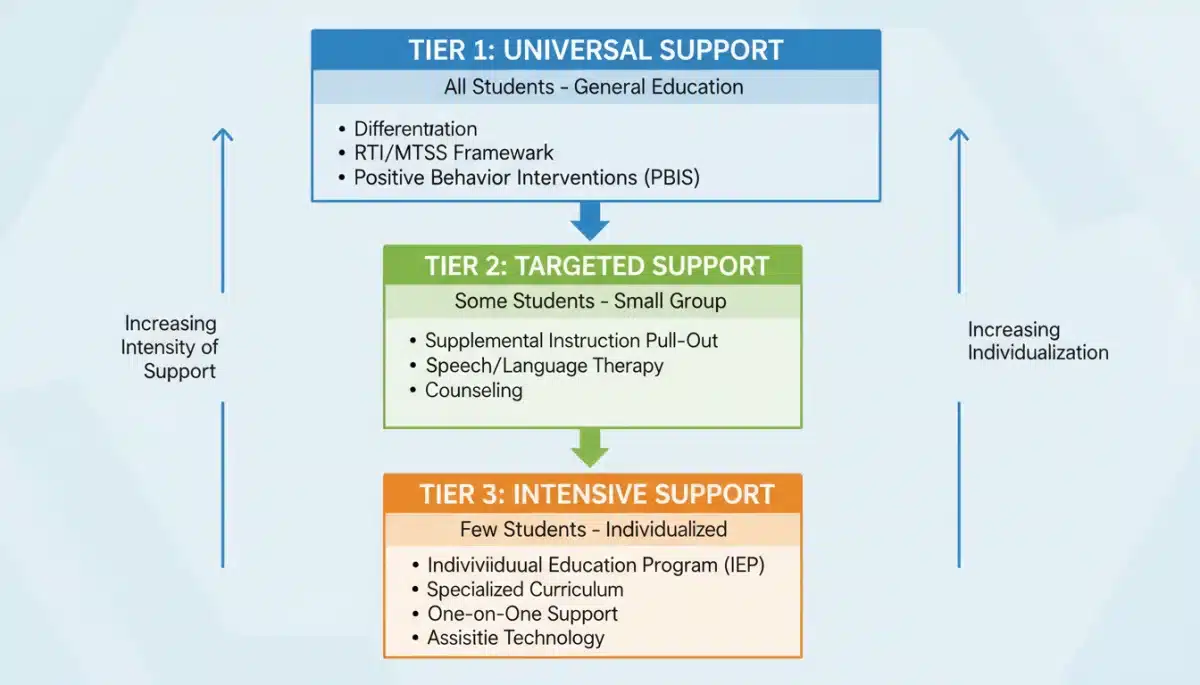
The interventions are typically delivered by general education teachers, specialists, or trained paraprofessionals. They are evidence-based and focus on areas such as reading fluency, math computation, or social skills. The small group setting allows for more individualized attention and immediate feedback, which can accelerate student progress.
identifying students for tier 2
Identification for Tier 2 support is primarily based on data gathered from Tier 1 universal screenings and ongoing classroom assessments. Students who consistently struggle despite high-quality core instruction are strong candidates for Tier 2. The process typically involves:
- Data Analysis: Reviewing performance on screeners, benchmark assessments, and classroom assignments.
- Teacher Observation: Documenting specific academic or behavioral concerns observed during instruction.
- Parent Input: Gathering insights from parents about their child’s learning and development.
Once identified, students receive targeted interventions for a specified period, usually 6-12 weeks. During this time, their progress is closely monitored, and adjustments are made as needed. If a student responds well to Tier 2 interventions, they may return to full Tier 1 support. However, if they continue to struggle, it may indicate a need for more intensive support, leading to consideration for Tier 3.
Tier 2 is a crucial bridge, providing necessary support before a student is considered for special education eligibility. It ensures that students receive early, focused help, potentially preventing the need for more formal special education services.
tier 3: intensive individualized special education services
Tier 3 represents the most intensive level of support within the 2026 special education framework. Students who reach Tier 3 have demonstrated persistent academic or behavioral difficulties despite receiving high-quality Tier 1 instruction and targeted Tier 2 interventions. At this stage, a comprehensive evaluation for special education eligibility is typically initiated.
This tier is characterized by highly individualized, specialized instruction and services, often delivered by special education professionals. These services are designed to address significant learning disabilities or other qualifying conditions that substantially impact a student’s educational performance. The support provided in Tier 3 is typically long-term and outlined in an Individualized Education Program (IEP).
eligibility for tier 3 and iep development
The process for determining eligibility for Tier 3 special education services is rigorous and legally mandated. It involves a multidisciplinary team, including parents, educators, and specialists, who review assessment data and observations. Key steps include:
- Comprehensive Evaluation: A thorough assessment of the student’s cognitive, academic, social-emotional, and physical development.
- Eligibility Determination: The team determines if the student meets federal and state criteria for one or more disability categories under the Individuals with Disabilities Education Act (IDEA).
- IEP Development: If eligible, an IEP is developed, outlining specific goals, services, accommodations, modifications, and placement.
The IEP is a legally binding document that details the specialized instruction and related services a student will receive. These services can include specialized academic instruction, speech therapy, occupational therapy, physical therapy, counseling, and more. The IEP team regularly reviews the student’s progress and adjusts the plan as needed to ensure continued educational benefit.
Placement decisions for Tier 3 students are based on the principle of the Least Restrictive Environment (LRE), meaning students are educated with their non-disabled peers to the maximum extent appropriate. This could range from support within the general education classroom with pull-out services to a self-contained special education classroom, depending on the student’s needs.
the role of identification and assessment in the 2026 model
Effective identification and comprehensive assessment are the cornerstones of the 2026 three-tiered special education model. Without accurate and timely data, students may not receive the appropriate level of support, leading to frustration and academic stagnation. The new framework places a strong emphasis on continuous monitoring and data-driven decision-making at every tier.
From universal screenings in Tier 1 to targeted diagnostic assessments in Tier 2, and finally, comprehensive evaluations for Tier 3, the assessment process is designed to be cumulative and responsive. This ensures that interventions are precisely matched to student needs, evolving as the student’s learning profile becomes clearer. The goal is to move beyond a “wait-to-fail” approach, embracing early and proactive identification.
data-driven decision making
The 2026 model heavily relies on data to guide decisions at each tier. This includes:
- Formative Assessments: Ongoing checks for understanding within daily instruction.
- Progress Monitoring: Regular assessment of student progress on specific skills during interventions.
- Standardized Tests: Broader measures of academic achievement used for screening and evaluation.
- Behavioral Data: Tracking incidents, interventions, and positive behavior supports.
This wealth of data allows teams to analyze trends, identify patterns, and determine the effectiveness of various interventions. It also provides objective evidence to support decisions regarding a student’s movement between tiers or the need for a special education evaluation. Transparency in data collection and analysis is key to building trust with parents and ensuring equitable practices.
Furthermore, the 2026 framework encourages the use of culturally and linguistically appropriate assessment tools. This helps to ensure that students from diverse backgrounds are not misidentified for special education services due to language barriers or cultural differences. The focus is on understanding the whole child and their unique learning context.
parent and family involvement in the new framework
The success of the 2026 special education tiered model heavily depends on strong partnerships between schools and families. Parents are invaluable members of the educational team, possessing unique insights into their child’s strengths, challenges, and learning styles. The new framework explicitly promotes active family involvement at all three tiers, recognizing that consistent support at home can significantly amplify school-based interventions.
From understanding universal supports in Tier 1 to collaborating on targeted interventions in Tier 2, and becoming integral members of the IEP team in Tier 3, parents play a crucial role. Schools are encouraged to provide clear communication, accessible resources, and opportunities for meaningful participation, ensuring families feel empowered and informed throughout their child’s educational journey.
empowering parents as partners
To facilitate effective parent involvement, schools should focus on:
- Clear Communication: Providing regular updates on student progress and intervention effectiveness in an understandable language.
- Resource Sharing: Offering information about the tiered system, parent rights, and available community resources.
- Collaborative Meetings: Inviting parents to participate in discussions about their child’s learning, goal setting, and intervention planning.
- Home-School Connection: Suggesting strategies and activities parents can use at home to reinforce school learning.
When parents are actively involved, they can provide critical information that helps educators tailor interventions more effectively. They can also reinforce learning at home, which can significantly boost a student’s progress. This partnership creates a consistent and supportive environment for the student, bridging the gap between school and home.
For students in Tier 3 with an IEP, parent involvement becomes even more formalized. Parents have specific legal rights under IDEA, including participating in all IEP meetings, providing consent for evaluations and services, and advocating for their child’s needs. The 2026 framework reinforces the importance of these rights and ensures that parents are fully informed and engaged throughout the IEP process.
challenges and opportunities for implementation in 2026
Implementing the new 2026 three-tiered special education services model presents both significant challenges and exciting opportunities for schools and districts across the United States. While the framework promises a more equitable and effective system, its successful rollout will require careful planning, adequate resources, and a commitment to ongoing professional development.
One primary challenge lies in ensuring consistent implementation across diverse school environments, from large urban districts to small rural schools. Resource allocation, including funding for training, personnel, and evidence-based materials, will be critical. However, these challenges also open doors for innovation, collaboration, and a renewed focus on student-centered education.
navigating implementation hurdles
Schools and districts will need to address several key areas to ensure a smooth transition:
- Professional Development: Training all staff on the new framework, intervention strategies, and data analysis.
- Resource Allocation: Securing funding for new programs, materials, and additional support staff.
- Data Management Systems: Implementing robust systems to track student progress and intervention effectiveness across tiers.
- Parent Engagement Strategies: Developing effective ways to inform and involve families in the new process.
Despite these hurdles, the opportunities presented by the 2026 framework are substantial. It offers a chance to create a more proactive, preventative system that identifies and addresses student needs earlier, reducing the likelihood of long-term academic struggles. It also promotes a culture of collaboration among educators, fostering a shared responsibility for all students’ success.
Ultimately, the 2026 changes to special education services have the potential to transform how schools support students with disabilities. By embracing the principles of early intervention, individualized support, and strong home-school partnerships, the goal is to create an educational system where every student has the chance to thrive and reach their full potential.
| Key Aspect | Description |
|---|---|
| Tier 1: Universal Support | High-quality, evidence-based general education for all students; focus on inclusive practices. |
| Tier 2: Targeted Interventions | Small group, supplemental support for students not responding to Tier 1; progress monitored. |
| Tier 3: Intensive Services | Individualized special education with an IEP for students with significant needs; comprehensive evaluation required. |
| Parent Involvement | Crucial at all tiers, ensuring families are informed partners in their child’s educational journey. |
frequently asked questions about 2026 special education tiers
The primary goal is to provide more structured, timely, and individualized support for students with diverse learning needs. It aims to identify academic and behavioral challenges earlier, offer evidence-based interventions, and ensure students receive the appropriate level of assistance to succeed in their education.
A student moves from Tier 1 to Tier 2 when their needs are not adequately met through universal general education supports. This decision is typically based on data from universal screenings, classroom assessments, and teacher observations indicating persistent academic or behavioral difficulties despite high-quality core instruction.
An IEP (Individualized Education Program) is a legally binding document outlining specialized instruction and services for students eligible for special education. It is developed at Tier 3, after a comprehensive evaluation determines a student meets the criteria for a disability under IDEA, requiring intensive, individualized support.
Parents are crucial partners at all tiers. They can get involved by communicating with teachers, reviewing student progress data, participating in intervention planning meetings, and actively contributing to IEP development. Schools are encouraged to provide clear information and resources to facilitate this partnership.
Key challenges include ensuring consistent implementation across diverse school settings, securing adequate funding for professional development and resources, and establishing robust data management systems. Overcoming these will require strategic planning, collaboration, and a strong commitment from all educational stakeholders.
conclusion
The introduction of the new 2026 three-tiered special education services model represents a significant step forward in ensuring equitable and effective support for all students with diverse learning needs. By emphasizing early intervention, data-driven decision-making, and strong family-school partnerships, this framework aims to create a more responsive and inclusive educational environment. While implementation will undoubtedly bring its challenges, the opportunities for improved student outcomes and a more streamlined support system are immense. Understanding these tiers is crucial for parents, educators, and administrators alike, as we collectively work towards fostering success for every student in the years to come.