
Congress is currently engaged in critical debates over two significant proposals concerning Healthcare Reform in 2026, with the aim of expanding coverage and enhancing accessibility for all Americans.
The landscape of American healthcare is perpetually evolving, and as we approach 2026, the discussions in Congress regarding Healthcare Reform in 2026 have intensified. These ongoing debates are not merely political rhetoric; they represent a pivotal moment that could redefine access, affordability, and the very structure of healthcare for millions across the United States. Understanding the nuances of these proposals, their potential impacts, and the forces driving them is essential for every citizen.
The Current State of US Healthcare and the Need for Reform
The United States healthcare system, while offering some of the most advanced medical treatments globally, continues to grapple with significant challenges. Issues of high costs, unequal access, and administrative complexities persist, prompting renewed calls for comprehensive reform. Many Americans still face daunting financial burdens due to medical expenses, and a considerable portion remains uninsured or underinsured, highlighting the urgent need for systemic changes.
Despite previous legislative efforts, the current system leaves substantial gaps in coverage and affordability. Millions struggle to afford necessary treatments, prescription drugs, or even routine preventative care. This situation not only impacts individual well-being but also has broader economic ramifications, affecting productivity and national health outcomes. The imperative to address these shortcomings is a driving force behind the current congressional deliberations.
Key Challenges Driving Reform
Several critical challenges underscore the necessity of the proposed healthcare reforms. These issues are complex and multifaceted, requiring carefully considered solutions that balance various interests.
- Rising Costs: Healthcare expenditures continue to climb, far outpacing inflation and wage growth, making insurance premiums and deductibles increasingly unaffordable for many families and businesses.
- Access Disparities: Geographic location, socioeconomic status, and racial or ethnic background often dictate the quality and availability of healthcare services, leading to significant disparities in health outcomes.
- Insurance Gaps: Even with existing frameworks, millions of Americans remain uninsured or face coverage limitations that leave them vulnerable to catastrophic medical bills.
- Administrative Burden: The complex web of insurance companies, providers, and regulatory bodies creates an administrative burden that drives up costs and complicates patient care.
Understanding these foundational problems is crucial to appreciating the context and urgency of the legislative proposals currently on the table. Both proposals aim to tackle these deeply entrenched issues, albeit through different strategic approaches.
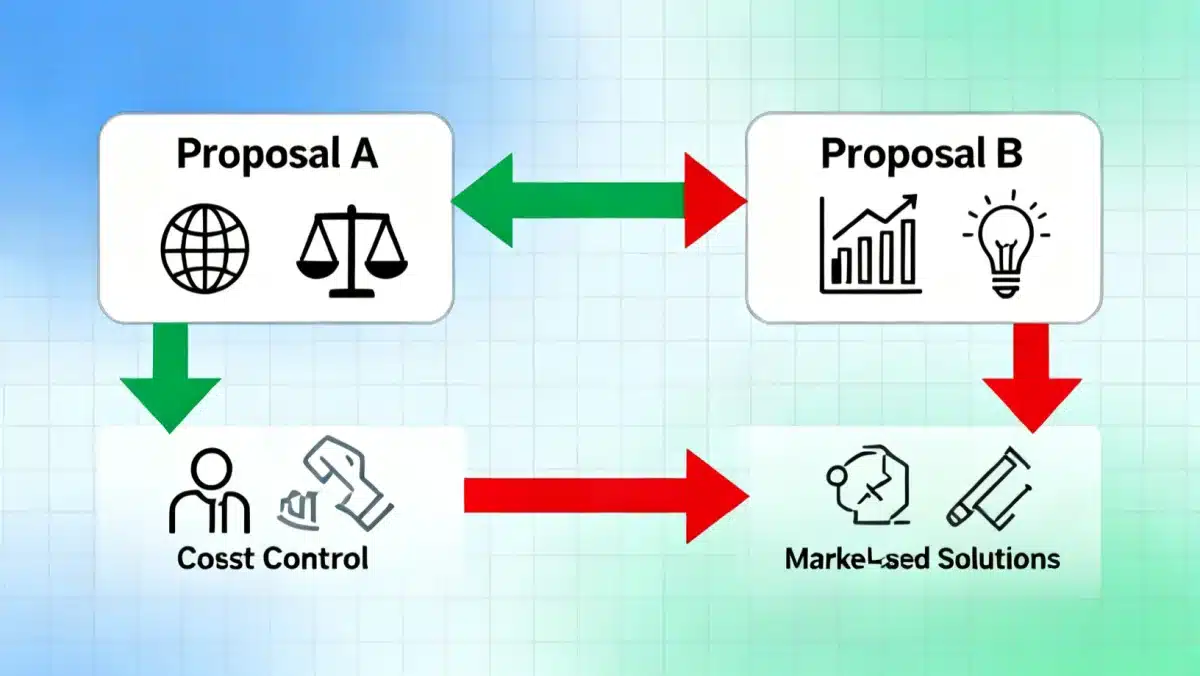
Proposal A: Expanding Public Options and Subsidies
One of the central proposals currently under vigorous debate in Congress is often referred to as ‘Proposal A,’ which focuses predominantly on expanding public options and increasing federal subsidies to make healthcare more affordable and accessible. This approach seeks to build upon existing structures by introducing a government-backed insurance plan and enhancing financial assistance for those purchasing coverage.
Advocates for Proposal A argue that a public option would provide a competitive alternative to private insurance plans, driving down costs through increased competition and greater negotiating power. By offering a stable, non-profit choice, it could potentially stabilize markets and ensure more comprehensive benefits for consumers. The expansion of subsidies is intended to directly reduce the financial burden on low and middle-income families, enabling them to afford quality insurance.
Core Components of Proposal A
Proposal A is characterized by several key elements designed to achieve its objectives of expanded coverage and affordability. These components are interconnected and aim to create a more robust safety net.
- Government-Backed Public Option: This would establish a federal health insurance plan, similar to Medicare, but available to all Americans regardless of age, offering a new choice alongside private insurers.
- Increased Federal Subsidies: Significantly higher financial assistance would be provided to individuals and families purchasing health insurance through the Affordable Care Act (ACA) marketplaces, making premiums more manageable.
- Lowering Eligibility Age for Medicare: Some versions of Proposal A also suggest lowering the eligibility age for Medicare, allowing more older Americans to access comprehensive government-funded healthcare.
- Expanded Medicaid Funding: Enhanced federal funding for state Medicaid programs would encourage more states to expand their coverage, reaching more low-income individuals.
Critics of Proposal A often voice concerns about the potential impact on the private insurance market, arguing that a public option could lead to unfair competition and ultimately diminish private choices. They also raise questions about the fiscal sustainability of such a large-scale government program and the potential for increased taxes. Despite these concerns, supporters maintain that Proposal A represents a vital step towards achieving universal healthcare coverage in the United States.
Proposal B: Market-Based Solutions and Deregulation
In stark contrast to Proposal A, ‘Proposal B’ champions a market-based approach to healthcare reform, emphasizing deregulation, increased competition among private insurers, and consumer-driven healthcare choices. This proposal is rooted in the belief that a less regulated market will naturally lead to lower costs and higher quality services through the forces of supply and demand.
Proponents of Proposal B argue that government intervention often stifles innovation and creates inefficiencies. They believe that by removing certain regulatory burdens and fostering a more competitive environment, private insurers and healthcare providers will be incentivized to offer more diverse and affordable plans. The focus is on empowering consumers to make their own healthcare decisions, supported by transparent pricing and a wider array of options.
Key Features of Proposal B
Proposal B outlines several distinct features aimed at transforming the healthcare landscape through market mechanisms. These features are designed to enhance consumer choice and reduce costs without significant government expansion.
- Deregulating Insurance Markets: This would involve easing state and federal regulations on insurance companies, allowing them to offer a broader range of plans with fewer mandated benefits, potentially leading to lower premiums.
- Expanding Health Savings Accounts (HSAs): Proposal B often includes provisions to expand the eligibility and contribution limits for HSAs, enabling individuals to save more for healthcare expenses on a tax-advantaged basis.
- Promoting Price Transparency: Mandates for hospitals and providers to publicly disclose their prices for services would allow consumers to shop around and compare costs before receiving care.
- Interstate Insurance Sales: Allowing insurance companies to sell plans across state lines is another key element, intended to increase competition and offer consumers more choice beyond their local markets.
Opponents of Proposal B express concerns that deregulation could lead to a rollback of consumer protections, potentially allowing insurers to deny coverage for pre-existing conditions or offer plans with inadequate benefits. They also worry that a purely market-driven system might exacerbate existing access disparities, leaving vulnerable populations without sufficient care. The debate over these two fundamentally different philosophies is at the heart of the current congressional discussions.
The Legislative Process and Congressional Debates
The journey of any significant healthcare legislation through Congress is a complex and often protracted process, and the current debates over Healthcare Reform in 2026 are no exception. Both Proposal A and Proposal B are undergoing intense scrutiny, with numerous hearings, committee markups, and floor debates shaping their final forms. The legislative process involves intricate negotiations, compromises, and strategic maneuvering by various political factions.
Key committees, such as the House Ways and Means Committee, the Senate Finance Committee, and the respective health committees, play crucial roles in drafting, reviewing, and amending these proposals. Lobbyists for various interest groups, including pharmaceutical companies, insurance providers, hospitals, and patient advocacy organizations, are actively engaged, seeking to influence the outcome. The public also has a voice through advocacy groups and direct communication with their elected representatives.
Challenges in Reaching Consensus
Achieving consensus on healthcare reform is notoriously difficult, given the deeply held ideological differences and the wide-ranging impacts on individuals and industries. The current political climate, characterized by partisan divisions, further complicates the path to a bipartisan agreement.
- Partisan Divide: Democrats generally favor expanding government’s role in healthcare, while Republicans tend to advocate for market-based solutions and less regulation, creating a significant ideological chasm.
- Economic Implications: Both proposals carry substantial economic implications, including potential impacts on federal spending, taxes, and the private sector, leading to fierce debates over fiscal responsibility.
- Public Opinion: Public sentiment on healthcare reform is often divided, making it challenging for lawmakers to craft legislation that satisfies a broad spectrum of voters without alienating key constituencies.
- Stakeholder Influence: Powerful interest groups exert considerable influence, advocating for provisions that benefit their members or industries, which can complicate efforts to achieve comprehensive reform.
The legislative calendar for 2026 is tight, and the pressure to deliver meaningful reform is mounting. Lawmakers are acutely aware of the historical significance of these debates and the potential for their decisions to shape the future of healthcare for generations to come. The outcome will depend on the ability of congressional leaders to bridge divides and find common ground amidst competing visions.
Potential Impacts of Each Proposal on Americans
The passage of either Proposal A or Proposal B would have profound and far-reaching impacts on various segments of the American population. Understanding these potential consequences is crucial for citizens, policymakers, and healthcare stakeholders alike. Each proposal offers a distinct vision for the future of healthcare, with different beneficiaries and potential drawbacks.
Proposal A, with its emphasis on public options and increased subsidies, is generally expected to benefit those who currently lack affordable insurance or struggle with high out-of-pocket costs. It could significantly reduce the number of uninsured Americans and provide greater financial security for many families. However, it might also lead to increased taxes for some and could face resistance from the private insurance industry.
Who Benefits and Who Might Face Challenges
Analyzing the potential winners and losers under each proposal provides a clearer picture of their respective implications.
- Under Proposal A:
- Beneficiaries: Low and middle-income individuals, those with pre-existing conditions, people in states without Medicaid expansion, and individuals seeking more affordable comprehensive coverage.
- Challenges: Private insurance companies might face increased competition, potentially leading to job losses in the sector. Higher federal spending could necessitate tax increases or reallocations of other budget funds.
- Under Proposal B:
- Beneficiaries: Healthy individuals seeking lower-premium, high-deductible plans; those who prefer more flexibility in choosing their healthcare services; and the private insurance industry, which could see reduced regulatory burdens.
- Challenges: Vulnerable populations, especially those with chronic conditions, might struggle with less comprehensive plans or higher out-of-pocket costs if consumer protections are weakened. There’s also a risk of increased disparities in access and quality of care.
The debate over these proposals is not just about policy; it’s about the fundamental values and priorities that will define the future of American society. The choices made in Congress will determine whether healthcare is primarily viewed as a right, a commodity, or a blend of both, with significant consequences for public health and economic equity.
Recent Updates and What to Watch For in 2026
As the congressional session progresses, there have been several recent updates regarding the debates on Healthcare Reform in 2026. Negotiations are fluid, and the details of both Proposal A and Proposal B are subject to ongoing modifications and compromises. Staying informed about these developments is crucial for understanding the evolving legislative landscape.
Recent reports indicate that bipartisan discussions, while challenging, are occurring behind closed doors, with some lawmakers exploring hybrid approaches that might incorporate elements from both proposals. This suggests a recognition that a purely ideological stance may not be sufficient to pass meaningful legislation, especially in a divided Congress. Public pressure and advocacy efforts continue to play a significant role in shaping these discussions.
Key Developments to Monitor
Several indicators will be critical to watch as the legislative process unfolds throughout 2026. These developments will offer insights into the likelihood and ultimate shape of any enacted reform.
- Committee Votes: The outcomes of votes in key committees will signal the level of support for each proposal and any amendments.
- Public Opinion Shifts: Changes in public sentiment, often influenced by media coverage and advocacy campaigns, can sway undecided lawmakers.
- Economic Projections: New analyses from the Congressional Budget Office (CBO) or other independent bodies regarding the cost and impact of each proposal will be highly influential.
- Presidential Endorsement: The degree of presidential support and engagement in negotiations can significantly impact the momentum of a reform effort.
- Midterm Elections: The proximity of upcoming elections could either accelerate or slow down legislative action, depending on the political calculations of lawmakers.
The path to healthcare reform is rarely straightforward, and 2026 promises to be a year of intense political activity and public engagement on this critical issue. The final outcome will undoubtedly reflect a complex interplay of political will, economic realities, and the diverse needs of the American people. Citizens are encouraged to remain engaged and voice their perspectives as these debates continue to unfold.
| Key Point | Brief Description |
|---|---|
| Proposal A Focus | Expands public options and federal subsidies to enhance affordability and access. |
| Proposal B Focus | Emphasizes market-based solutions, deregulation, and consumer choice for healthcare. |
| Legislative Challenges | Partisan divides, economic implications, and stakeholder influence complicate consensus. |
| Impact on Citizens | Both proposals have distinct benefits and challenges for different demographics. |
Frequently Asked Questions About 2026 Healthcare Reform
The primary goals of Healthcare Reform in 2026 are to expand health insurance coverage, reduce healthcare costs, and improve the overall quality and accessibility of medical services for all Americans, addressing existing systemic inequalities and financial burdens.
Proposal A advocates for expanding public health insurance options and increasing federal subsidies to make coverage more affordable. In contrast, Proposal B focuses on market-based solutions, deregulation, and promoting competition among private insurers to drive down costs and enhance consumer choice.
The impact on your current health insurance plan will depend on which proposal, or a hybrid version, is ultimately passed. Proposal A might introduce a public option that could offer a new choice, while Proposal B could lead to more varied private plans with potentially different benefits and costs.
Critics of Proposal A worry about its impact on private insurance markets and fiscal sustainability. Opponents of Proposal B are concerned about potential reductions in consumer protections, the adequacy of benefits in deregulated plans, and increased disparities in care for vulnerable populations.
To stay informed, follow reputable news sources, check official government websites like Congress.gov, and engage with non-partisan healthcare policy organizations. Many congressional offices also provide updates on legislative progress and opportunities for public input regarding Healthcare Reform in 2026.
Conclusion
The ongoing congressional debates surrounding Healthcare Reform in 2026 represent a critical juncture for the United States. With two distinct proposals, one favoring expanded public options and subsidies, and the other championing market-based solutions and deregulation, the future of American healthcare hangs in the balance. The decisions made in the coming months will profoundly influence the accessibility, affordability, and quality of care for millions, underscoring the importance of informed public engagement and thoughtful legislative action. As these discussions evolve, continued vigilance and participation from all stakeholders will be essential to shaping a healthcare system that truly serves the needs of the nation.