
The new EPA regulations for 2026 are poised to fundamentally alter the automotive landscape in the United States, mandating stricter emission standards and fostering a rapid shift towards cleaner vehicle technologies.
The automotive industry stands on the precipice of a transformative era, driven by the impending new EPA regulations for 2026. These updated emission standards are not merely incremental changes; they represent a significant leap forward in environmental protection and will profoundly influence how vehicles are designed, manufactured, and sold across the United States. Understanding these regulations is crucial for manufacturers, consumers, and policymakers alike.
Understanding the Core of New EPA Regulations for 2026
The Environmental Protection Agency (EPA) periodically revises its emission standards to address evolving environmental challenges and technological advancements. For 2026, these revisions are particularly stringent, targeting a substantial reduction in greenhouse gas emissions and other harmful pollutants from light-duty and medium-duty vehicles. The primary goal is to combat climate change and improve air quality, setting ambitious targets that demand innovative solutions from the automotive sector.
These regulations build upon previous frameworks but introduce more aggressive timelines and higher efficiency requirements. Manufacturers will need to invest heavily in research and development to meet these new benchmarks, pushing the boundaries of current automotive engineering. The focus extends beyond tailpipe emissions to encompass the entire lifecycle of a vehicle, including manufacturing processes and material sourcing.
Key Pillars of the 2026 EPA Standards
- Greenhouse Gas Reductions: Mandates significant cuts in CO2 emissions, accelerating the transition to zero-emission vehicles.
- Criteria Pollutant Limits: Stricter limits on smog-forming pollutants like nitrogen oxides (NOx) and particulate matter (PM).
- Durability Requirements: Enhanced standards for emission control system durability over the vehicle’s lifespan.
In essence, the 2026 EPA regulations are designed to create a cleaner, more sustainable automotive future. They are a clear signal to the industry that environmental performance will be a defining competitive factor moving forward, necessitating a strategic re-evaluation of product portfolios and manufacturing strategies.
Impact on Vehicle Manufacturing and Design
The updated EPA regulations for 2026 will necessitate a fundamental rethinking of vehicle manufacturing and design processes. Automotive companies are already responding by accelerating their electric vehicle (EV) development programs and investing in advanced combustion engine technologies that can meet the new, lower emission thresholds. This shift requires not only engineering prowess but also significant capital investment in new production lines and supply chains.
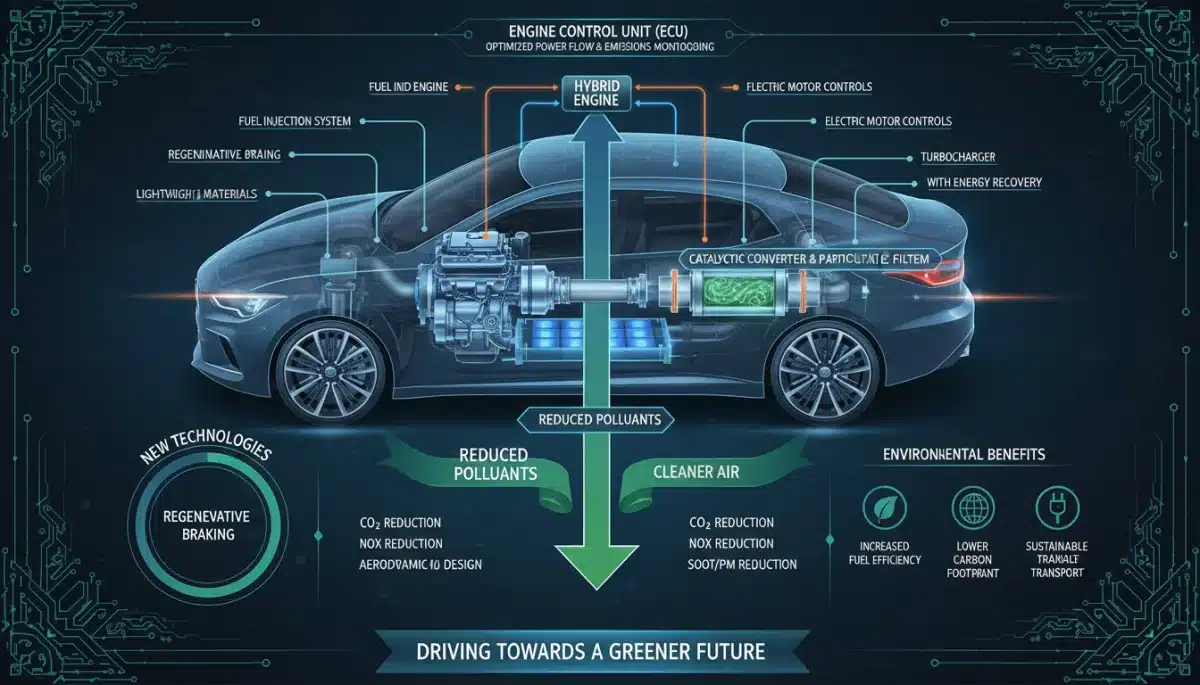
Design teams are focusing on lightweight materials, improved aerodynamics, and integrated smart technologies to enhance fuel efficiency and reduce overall carbon footprint. The emphasis is on holistic vehicle design, where every component contributes to meeting stringent environmental targets. This includes optimizing everything from tire rolling resistance to air conditioning systems for energy efficiency.
Technological Innovations Driven by Regulations
- Battery Technology: Rapid advancements in battery chemistry and density are crucial for extended EV range and faster charging.
- Advanced Powertrains: Development of highly efficient hybrid systems and next-generation internal combustion engines for transitional periods.
- Software and Controls: Sophisticated engine management systems and predictive analytics to optimize performance and emissions in real-time.
Ultimately, these regulations are fostering an environment of intense innovation. Manufacturers are not just trying to comply; they are striving to lead, recognizing that early adoption of sustainable technologies can provide a significant market advantage. The design philosophy is moving towards ‘clean by design,’ where environmental considerations are integrated from conception rather than being an afterthought.
The Accelerating Shift Towards Electric Vehicles
Perhaps the most profound effect of the new EPA regulations for 2026 is the undeniable acceleration of the shift towards electric vehicles (EVs). With increasingly stringent emission targets, EVs offer a direct pathway to compliance, as they produce zero tailpipe emissions. This regulatory push is aligning with growing consumer interest and technological maturity, creating a powerful momentum for electrification across the automotive landscape.
Automakers are committing billions to EV research, development, and manufacturing. New models are being introduced at an unprecedented rate, covering a wide range of segments from compact cars to heavy-duty trucks. This expansion is critical for making EVs accessible and appealing to a broader consumer base, addressing concerns about range anxiety, charging infrastructure, and initial purchase cost. The regulations act as a catalyst, transforming what was once a niche market into the mainstream.

Government incentives and infrastructure development are also playing a crucial role in supporting this transition. Federal and state programs are offering tax credits for EV purchases and investing in a robust national charging network, making EV ownership more viable and convenient. The synergy between regulatory pressure and supportive policies is creating a fertile ground for EV adoption.
The move to EVs is not without its challenges, including battery material sourcing and grid capacity. However, the regulatory framework clearly signals that these are challenges the industry must overcome, propelling innovation in energy storage and renewable energy integration. The 2026 regulations solidify the EV’s position as the future of personal and commercial transportation.
Economic Implications for the Automotive Industry
The economic implications of the new EPA regulations for 2026 are far-reaching, affecting everything from manufacturing costs to consumer prices and job markets. Initially, automakers face significant investment costs in retooling factories, developing new technologies, and sourcing sustainable materials. These upfront expenditures are substantial but are viewed as necessary for long-term competitiveness and compliance.
For consumers, the regulations could lead to higher initial vehicle prices, particularly for advanced EV models or highly efficient internal combustion engine (ICE) vehicles. However, these costs are often offset by lower operating expenses due to increased fuel efficiency and reduced maintenance for EVs. Government incentives and tax credits are also designed to mitigate the financial burden on buyers, making cleaner vehicles more accessible.
Market Shifts and Investment Opportunities
- Supply Chain Transformation: New demand for battery components, charging infrastructure, and rare earth minerals.
- Job Creation: Growth in manufacturing jobs for EVs and related technologies, alongside retraining for traditional automotive workers.
- Investment in R&D: Increased spending on sustainable materials, advanced powertrain research, and digital vehicle technologies.
The regulations are also creating new market opportunities for companies specializing in battery recycling, charging solutions, and renewable energy integration. This fosters a dynamic economic environment where innovation is rewarded, and sustainable practices become a cornerstone of business strategy. While the transition may present short-term hurdles, the long-term economic benefits include reduced healthcare costs from improved air quality and a more resilient, technologically advanced automotive sector.
Challenges and Opportunities for Manufacturers
Meeting the new EPA regulations for 2026 presents a dual landscape of significant challenges and unprecedented opportunities for automotive manufacturers. The primary challenge lies in the sheer scale and speed of technological transition required. Developing and mass-producing vehicles that meet stringent emission standards while remaining affordable and desirable to consumers is a complex endeavor.
Manufacturers must navigate global supply chain disruptions, particularly for critical EV components like batteries and semiconductors. The need for sustainable sourcing of raw materials, ethical labor practices, and efficient recycling programs adds another layer of complexity. Furthermore, workforce retraining and upskilling are essential to adapt to new manufacturing processes and technologies, ensuring a skilled labor force capable of producing advanced vehicles.
Navigating the Regulatory Landscape
- Compliance Costs: High initial investment in R&D and retooling factories to meet new standards.
- Supply Chain Resilience: Ensuring a stable and ethical supply of critical materials for EV production.
- Consumer Adoption: Overcoming range anxiety, charging infrastructure limitations, and higher upfront costs to drive EV sales.
Despite these challenges, the regulations open up vast opportunities. Companies that successfully innovate and adapt early can establish themselves as leaders in the green automotive market, gaining a significant competitive edge. The demand for cleaner vehicles is growing globally, and those who can deliver will capture a larger market share. Furthermore, the push for efficiency often leads to breakthroughs that benefit other areas of manufacturing and technology.
The regulations encourage strategic partnerships and collaborations, fostering an ecosystem of innovation that includes technology providers, energy companies, and infrastructure developers. This collaborative approach can accelerate progress and distribute the burden of investment, turning regulatory pressure into a collective drive towards a sustainable future.
Consumer Implications and Future Outlook
For consumers, the new EPA regulations for 2026 will bring a noticeable shift in the available vehicle landscape. Expect to see a wider array of electric and highly fuel-efficient hybrid vehicles, with fewer traditional gasoline-only options. The emphasis will be on vehicles that offer lower operating costs, quieter rides, and advanced technological features, often coupled with environmental benefits.
The initial purchase decision might involve a higher upfront cost for some cleaner vehicles, but this is increasingly being offset by government incentives, lower fuel expenses, and reduced maintenance. Consumers will also benefit from improved air quality in urban areas and a reduced carbon footprint, contributing to broader environmental goals. The market will likely become more segmented, catering to those who prioritize performance, range, or environmental impact.
The future outlook points towards a highly electrified and technologically advanced automotive market. Charging infrastructure will continue to expand, making EV ownership more convenient. Battery technology will improve, offering longer ranges and faster charging times. Autonomous driving features, already integrated into many vehicles, will become more sophisticated, further enhancing the driving experience.
Ultimately, the 2026 EPA regulations are setting the stage for a dramatic transformation of personal mobility. Consumers will have access to vehicles that are not only more environmentally friendly but also more efficient, technologically advanced, and enjoyable to drive. This regulatory push, combined with technological innovation and evolving consumer preferences, is paving the way for a sustainable and exciting future for the automotive industry.
| Key Point | Brief Description |
|---|---|
| Stricter Emission Standards | Mandates significant reductions in greenhouse gases and pollutants for 2026 and beyond. |
| EV Acceleration | Regulations are a major catalyst for the rapid adoption and development of electric vehicles. |
| Industry Transformation | Requires substantial investment in R&D, new manufacturing processes, and supply chain shifts. |
| Consumer Impact | Higher initial costs potentially offset by lower operating expenses and government incentives for cleaner vehicles. |
Frequently Asked Questions About EPA 2026 Regulations
The primary goals are to significantly reduce greenhouse gas emissions and other harmful pollutants from light-duty and medium-duty vehicles. This aims to combat climate change, improve air quality, and accelerate the transition towards a cleaner transportation sector across the United States.
Manufacturers will need to invest heavily in research and development, retool factories for EV production, and optimize traditional powertrains. This will drive innovation in battery technology, lightweight materials, and advanced emission control systems to meet the new, stricter standards.
Initial vehicle prices for compliant models, especially EVs, might be higher. However, these costs are often mitigated by government incentives, tax credits, and lower long-term operating expenses due to improved fuel efficiency and reduced maintenance for electric vehicles.
Electric vehicles are central to meeting the 2026 EPA standards due to their zero tailpipe emissions. The regulations are designed to accelerate EV adoption, making them a crucial component of manufacturers’ strategies for compliance and environmental performance.
The regulations are expected to create new jobs in EV manufacturing, battery production, and charging infrastructure development. There will also be a need for retraining and upskilling for workers in traditional automotive sectors to adapt to new technologies and production methods.
Conclusion
The new EPA regulations for 2026 mark a pivotal moment for the automotive industry, signaling an unwavering commitment to environmental sustainability and technological advancement. These updated emission standards are not merely bureaucratic hurdles but a powerful impetus for innovation, driving manufacturers towards cleaner, more efficient, and ultimately more sustainable vehicle solutions. While challenges in investment and adaptation exist, the long-term benefits of improved air quality, reduced carbon emissions, and a thriving green economy are undeniable. For consumers, this translates into a future with a broader selection of environmentally conscious vehicles, offering lower operating costs and contributing to a healthier planet. The automotive landscape is evolving rapidly, and these regulations are a key driver in shaping its cleaner, electrified future.